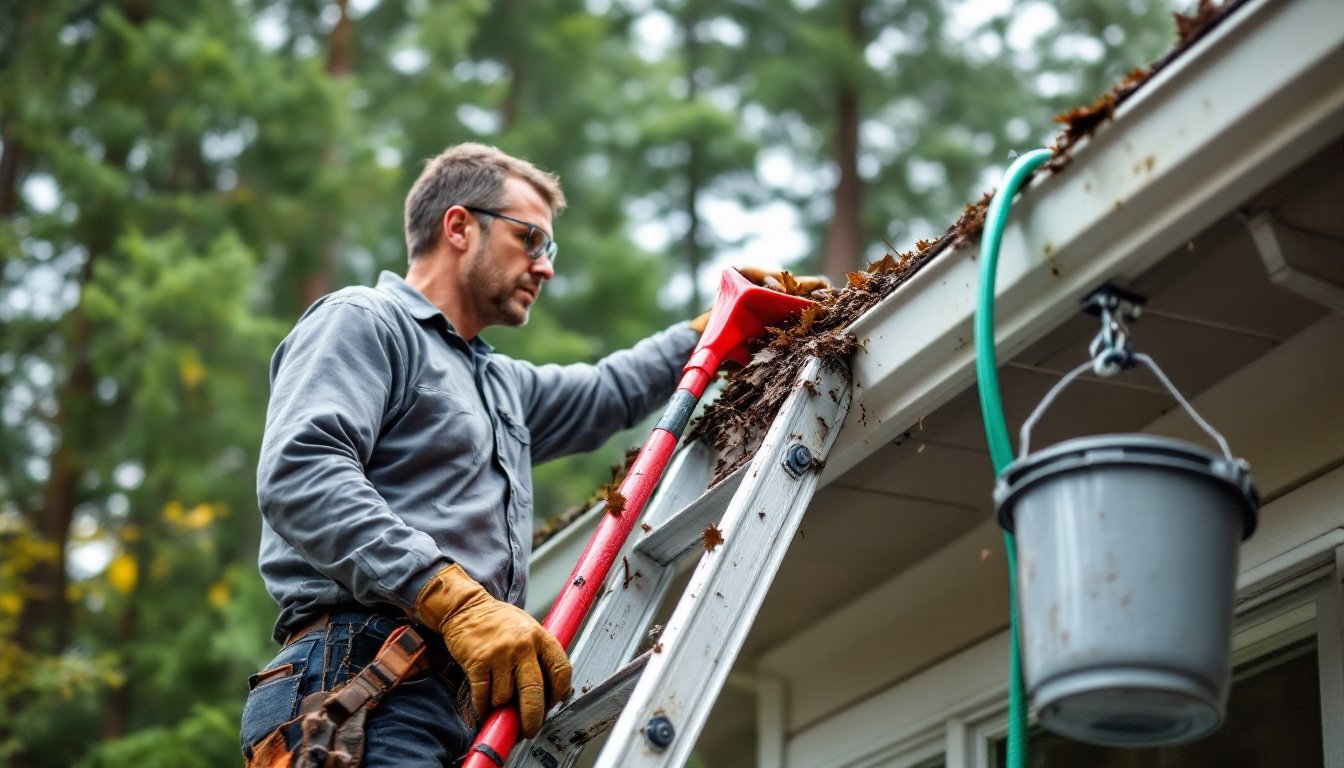
Erie homeowners face a relentless cycle: lake-effect snow in winter, spring thaw floods, summer storms, and fall leaves clogging every horizontal surface. Your gutters take the brunt of it all. Neglect them, and you’re looking at foundation damage, rotted fascia boards, basement flooding, and ice dams that peel shingles off like stickers. This guide walks through why Erie’s climate makes gutter maintenance non-negotiable, when to schedule cleanings, how to tackle the job safely yourself, and when to call in professionals who know the local weather patterns.
Table of Contents
ToggleKey Takeaways
- Gutter cleaning in Erie is critical twice annually due to lake-effect snow (100+ inches yearly), spring thaw floods, and heavy leaf accumulation that can cause foundation damage and ice dams.
- Schedule gutter cleaning in late November after leaf drop and late March to early April after snowmelt; avoid cleaning during December through February freeze-thaw periods when ice makes work dangerous.
- DIY gutter cleaning requires proper safety equipment including a ladder stabilizer, non-slip gloves, and safety glasses, with a safe 4:1 ratio for ladder positioning and someone to foot the ladder when possible.
- Professional gutter cleaning services in Erie typically cost $125–$350 and offer insurance coverage, heavy-duty equipment, minor repairs, and inspection reports that DIY work cannot provide.
- Install gutter guards (micro-mesh screens or reverse-curve systems), trim overhanging branches to 6+ feet above the roofline, and improve attic insulation to R-49 to prevent ice dams and reduce cleaning frequency.
Why Gutter Cleaning Is Critical for Erie Homes
Erie sits in a unique weather pocket where Lake Erie dumps an average of 100+ inches of snow annually and spring rains run heavy. Gutters here don’t just move water, they handle freeze-thaw cycles, wet leaves that compact into cement-like masses, and ice dams that form when snowmelt refreezes at the roof edge.
Clogged gutters cause foundation settling when overflow saturates the soil around your basement walls. Clay-heavy Erie soil expands when wet, pushing against foundation walls and cracking them over time. Water that should drain 6-10 feet away from your foundation instead pools at the base, seeping through cracks or overwhelming perimeter drains.
Fascia and soffit rot happens fast here. Erie’s humidity keeps wet wood from drying out between storms. A single season of overflowing gutters can turn solid fascia boards into spongy pulp that won’t hold gutter hangers. Replacement costs run $6-$20 per linear foot depending on material, far more than a $150-$300 gutter cleaning.
Ice dams form when heat escaping through your roof melts snow, which refreezes at the cold gutter line. The ice backs water up under shingles, soaking roof decking and dripping into walls. Proper gutter flow prevents this by keeping meltwater moving off the roof instead of pooling.
When to Schedule Gutter Cleaning in Erie’s Climate
Erie gutters need cleaning at least twice annually, late fall and late spring, but three times is smarter given the local weather.
Late November (after leaf drop): Maples, oaks, and ash trees dominate Erie neighborhoods, dropping leaves through October and early November. Wait until trees are fully bare before cleaning, usually after the first hard freeze. Leaves mixed with November rain turn into a dense mat that blocks downspouts completely.
Late March to early April (after snowmelt): Winter debris, shingle grit from ice dams, broken twigs, and accumulated dirt, settles in gutters during spring thaw. Clean before April rains arrive. Check for frost damage to gutter seams and hangers while you’re up there.
Optional mid-summer cleaning (July): If you have mature trees overhanging your roof, seed pods, helicopter seeds from maples, and summer storms dump debris year-round. A quick mid-summer flush prevents buildup.
Skip cleaning during active freeze-thaw periods (December through February). Ice in gutters makes the job dangerous, and you risk cracking frozen gutter sections. If you spot ice dams forming mid-winter, address attic insulation and ventilation instead, that’s the root cause.
Watch for these signs you’ve waited too long: water stains on siding below gutters, sagging gutter sections, plants growing from gutter seams, or water spilling over edges during light rain.
DIY Gutter Cleaning: A Step-by-Step Guide for Erie Homeowners
Cleaning gutters yourself saves money but demands respect for ladder safety and Erie’s unpredictable weather. Don’t attempt this in wind above 10 mph or on wet roofs.
Essential Tools and Safety Equipment
Safety gear (non-negotiable):
• Ladder stabilizer or standoff bracket, keeps the ladder off gutters and provides stable contact with siding
• Non-slip work gloves, nitrile-dipped or rubber-palmed: wet leaves are slippery
• Safety glasses, debris falls toward your face when scooping
• Closed-toe boots with good tread, no sandals, no smooth soles
Cleaning tools:
• Extension ladder, fiberglass or aluminum Type II (225 lb capacity minimum): needs to extend 3 feet above gutter line for safe access
• Gutter scoop or plastic trowel, metal scrapers gouge aluminum gutters
• 5-gallon bucket with S-hook to hang from ladder
• Garden hose with spray nozzle
• Plumber’s snake (optional), for clearing packed downspouts
Step-by-step process:
-
Set up safely: Position the ladder on firm, level ground. Maintain a 4:1 ratio (for every 4 feet of height, base should be 1 foot from the wall). Have someone foot the ladder if possible, especially on soft ground.
-
Scoop debris: Start at a downspout and work away from it. Scoop compacted leaves and sediment into your bucket. Don’t overfill, climbing with a heavy bucket throws off your balance.
-
Flush with water: After clearing a 20-foot section, spray from the high end toward downspouts. Water should flow freely. If it pools, you missed a clog.
-
Clear downspouts: If water backs up, disconnect the downspout at the elbow and feed a plumber’s snake up from the bottom or a hose down from the top. Downspouts clog where elbows redirect flow.
-
Inspect while you’re up there: Check for loose gutter spikes (common in older Erie homes), separated seams, or rust spots. Tighten or replace gutter hangers every 24 inches to prevent sagging under snow load.
-
Test drainage: Run water for 2-3 minutes and walk the perimeter. Water should exit downspouts at full volume and drain away from the foundation via splash blocks or extensions.
Many homeowners looking for guidance on various projects turn to platforms like HomeAdvisor for tutorials and cost estimates. For this particular task, timing matters, don’t rush the job to beat weather: wet ladders and sudden gusts are how falls happen.
Hiring Professional Gutter Cleaning Services in Erie
If you have a multi-story home, steep roof pitch (above 6:12), or health issues that make ladder work risky, hire a pro. Typical costs in Erie run $125-$350 for a single-family home, depending on linear footage, height, and debris volume. Two-story homes or properties with extensive tree cover push toward the higher end.
What pros offer that DIY doesn’t:
• Insurance coverage: Licensed services carry liability insurance if someone gets hurt or property is damaged. Your homeowner’s policy might not cover your own fall from a ladder during DIY work.
• Equipment for tough jobs: Commercial blowers, high-reach vacuum systems, and truck-mounted tools make fast work of heavy buildup. They’ll also bag and haul debris.
• Minor repairs on the spot: Many Erie services tighten loose hangers, reseal leaking seams, or adjust downspout angles while they’re up there.
• Inspection reports: Some companies photograph problem areas, damaged flashing, granule loss on shingles near gutters, or signs of pest nesting.
When vetting contractors, ask:
• Are you insured and bonded? (Get proof.)
• Do you clear downspouts and test flow, or just remove surface debris?
• What’s included in the quoted price? (Some charge extra for bagging debris or minor repairs.)
• Do you offer seasonal contracts? (Often cheaper than per-visit pricing.)
Research from highly-rated local professionals shows that Erie homeowners benefit from providers familiar with lake-effect snow challenges and local building stock. Check references and verify they’ve worked on homes similar to yours, colonial two-stories need different approach than ranch layouts.
Avoid door-knockers offering “$99 full-service gutter cleaning.” Legitimate Erie companies don’t cold-call after storms looking for quick cash. Those operations often lack insurance, rush the job, or damage gutters with aggressive power washing.
Preventing Gutter Problems Year-Round
Gutter guards reduce cleaning frequency but don’t eliminate it. Three types work in Erie’s climate:
• Micro-mesh screens (stainless steel): Block everything but water: cost $8-$25 per linear foot installed. Best for heavy tree cover. You’ll still need to brush off surface debris annually.
• Reverse-curve (nose-forward) systems: Water clings to the curve and flows into the gutter: leaves blow off. Work well but struggle with heavy spring pollen buildup and require professional installation ($15-$30/linear foot).
• Foam inserts: Cheap ($2-$4/foot) and DIY-friendly but degrade in 2-3 years and trap fine sediment. Not ideal for Erie winters, they absorb water and freeze, blocking flow.
Skip brush-style guards in Erie. They trap leaves and become clogged masses you’ll need to remove before cleaning the gutter underneath.
Trim overhanging branches to at least 6 feet above the roofline. This reduces leaf load, limits ice dam risk (branches shade snow from melting unevenly), and prevents squirrels from accessing your roof. Hire an arborist for cuts above 12 feet or near power lines.
Improve attic insulation and ventilation to prevent ice dams. Erie’s freeze-thaw cycles demand a cold roof deck. Add insulation to achieve R-49 in attics (current code for Zone 5 climate). Install soffit and ridge vents to maintain airflow, aim for 1 square foot of ventilation per 150 square feet of attic space.
Adjust downspout extensions seasonally. In spring and summer, use flexible or hinged extensions to carry water 6-10 feet from the foundation. In fall, before hard freeze, remove or flip them up so snow plows don’t rip them off. Resources like ImproveNet offer planning tools for drainage projects if your yard slopes toward the house.
Inspect gutter pitch annually. Gutters should slope 1/4 inch per 10 feet toward downspouts. Too flat and water pools: too steep and it overshoots the downspout during heavy rain. Adjust hangers to correct pitch, it’s a 20-minute fix that prevents chronic overflow.
Conclusion
Erie’s lake-effect weather and mature tree canopy make gutter cleaning a twice-annual must, not a maybe. Tackle it yourself if you’re comfortable on a ladder and have the right safety gear, or hire insured pros who understand local conditions. Either way, clean gutters mean a dry basement, intact fascia, and a roof that lasts its full lifespan. Skip the job, and you’ll pay far more fixing the damage than you ever would’ve spent on prevention.