Jacksonville homeowners face unique gutter challenges that differ from the rest of the country. The combination of year-round humidity, intense summer thunderstorms, and coastal proximity means gutters fill with debris faster and face greater stress from water volume. Clogged gutters don’t just overflow, they rot fascia boards, flood foundations, and invite termites into damp wood. This guide walks through everything needed to keep gutters flowing properly, from understanding Jacksonville’s specific climate demands to deciding whether to climb the ladder or call in help.
Table of Contents
ToggleKey Takeaways
- Gutter cleaning Jacksonville should happen at least three times yearly due to the city’s 52 inches of annual rainfall, intense summer storms, and debris from mature tree canopies.
- Clogged gutters cause expensive foundation damage exceeding $10,000, wood rot, and termite infestations—making regular maintenance critical in Jacksonville’s humid climate.
- DIY gutter cleaning requires proper safety equipment, a sturdy Type I ladder, and 2-3 hours for single-story homes, but professional services ($100-$400) are recommended for two-story properties and steep roofs.
- Gutter guards reduce but don’t eliminate cleaning frequency; mesh styles work for oak leaves while reverse-curve models handle heavy water flow better for Jacksonville’s unique climate demands.
- Preventive maintenance like annual hanger inspections, trimming overhanging branches, and extending downspouts 6 feet from the foundation saves homeowners an average of $1,200 in repairs over five years.
Why Gutter Cleaning Matters in Jacksonville’s Climate
Jacksonville averages 52 inches of rainfall annually, significantly higher than the national average of 38 inches. Most of that rain arrives in concentrated downpours during summer months, overwhelming gutters that aren’t clear.
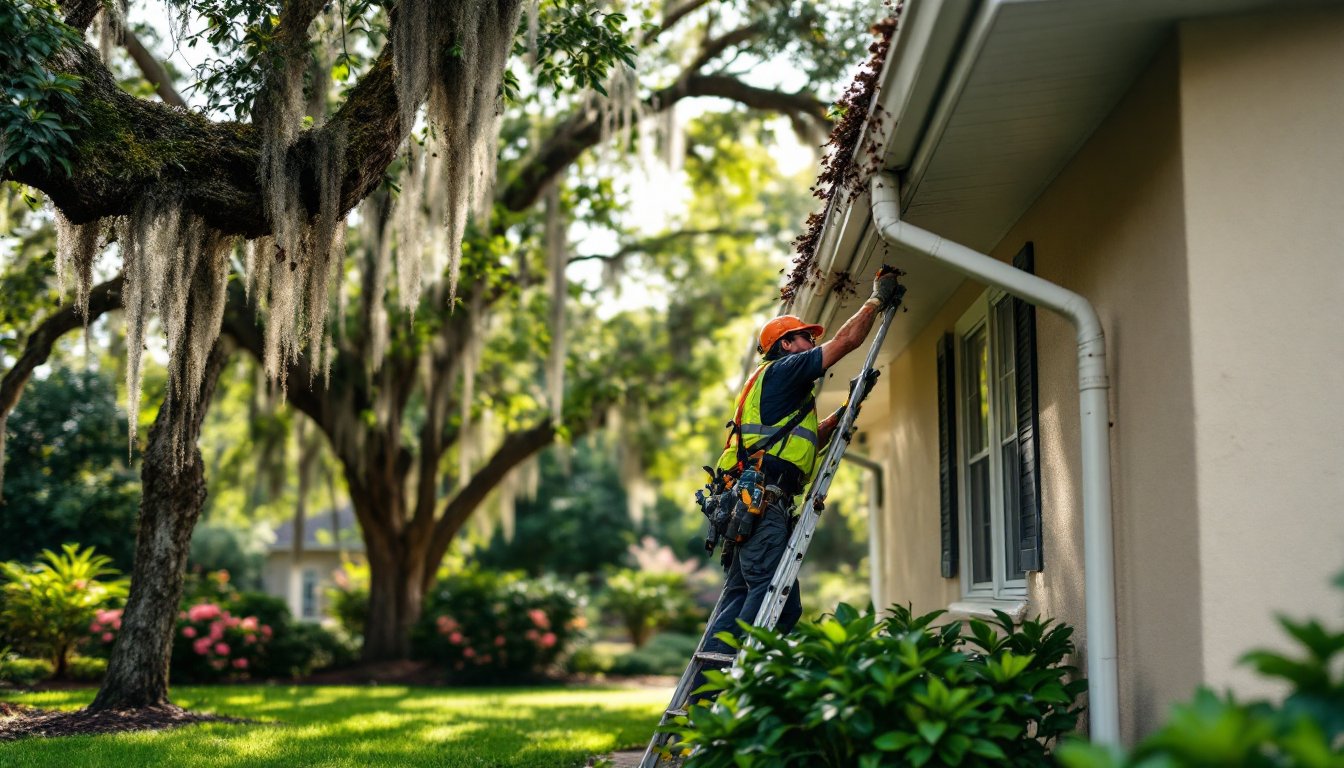
The city’s mature tree canopy presents another challenge. Oak leaves, pine needles, and palm fronds accumulate quickly, especially after tropical storms. Pine needles are particularly problematic, they interlock and form dense mats that block downspouts while allowing water to seep under shingles.
Humidity stays above 70% most of the year, meaning organic debris never fully dries out. That constant moisture promotes mold growth, wood rot, and mosquito breeding. Standing water in clogged gutters weighs roughly 8.3 pounds per gallon, stressing fascia boards and gutter hangers not designed to support that load.
Foundation damage is the costliest consequence. When water overflows near the foundation rather than draining through downspouts, it saturates the soil. Jacksonville’s sandy soil drains quickly under normal conditions, but persistent saturation causes settling and cracks. Repair costs often exceed $10,000 depending on severity.
Termites thrive in Jacksonville’s climate and are attracted to the moisture from overflowing gutters. Subterranean termites, common in North Florida, can colonize damp fascia boards within months of consistent water exposure.
When to Clean Your Gutters in Jacksonville
Most Jacksonville homes need cleaning at least three times per year, after spring pollen season (late April), before hurricane season peaks (July), and after fall leaf drop (November). Properties with overhanging oaks or pines may require quarterly service.
Spring pollen creates a thick, paste-like sludge when mixed with rain. This layer coats gutter interiors and hardens if left through summer heat. July cleaning prepares systems for August and September storms, when rainfall intensity matters more than total volume.
Watch for warning signs between scheduled cleanings: water spilling over gutter edges during rain, sagging sections, plant growth in gutters, or staining on siding below the roofline. Birds nesting in gutters indicate debris accumulation substantial enough to support nest building.
Check gutters within 48 hours after any tropical storm or hurricane. Wind deposits large volumes of leaves and small branches, even if the property wasn’t directly hit. Downspouts often clog with this sudden debris influx.
Timing matters for safety and effectiveness. Clean on overcast days between 65-80°F when possible, Florida sun heats metal gutters enough to cause burns. Avoid cleaning within 24 hours of rain: wet debris is heavier and organic material becomes slippery.
DIY Gutter Cleaning: A Step-by-Step Guide for Jacksonville Homeowners
Essential Tools and Safety Equipment
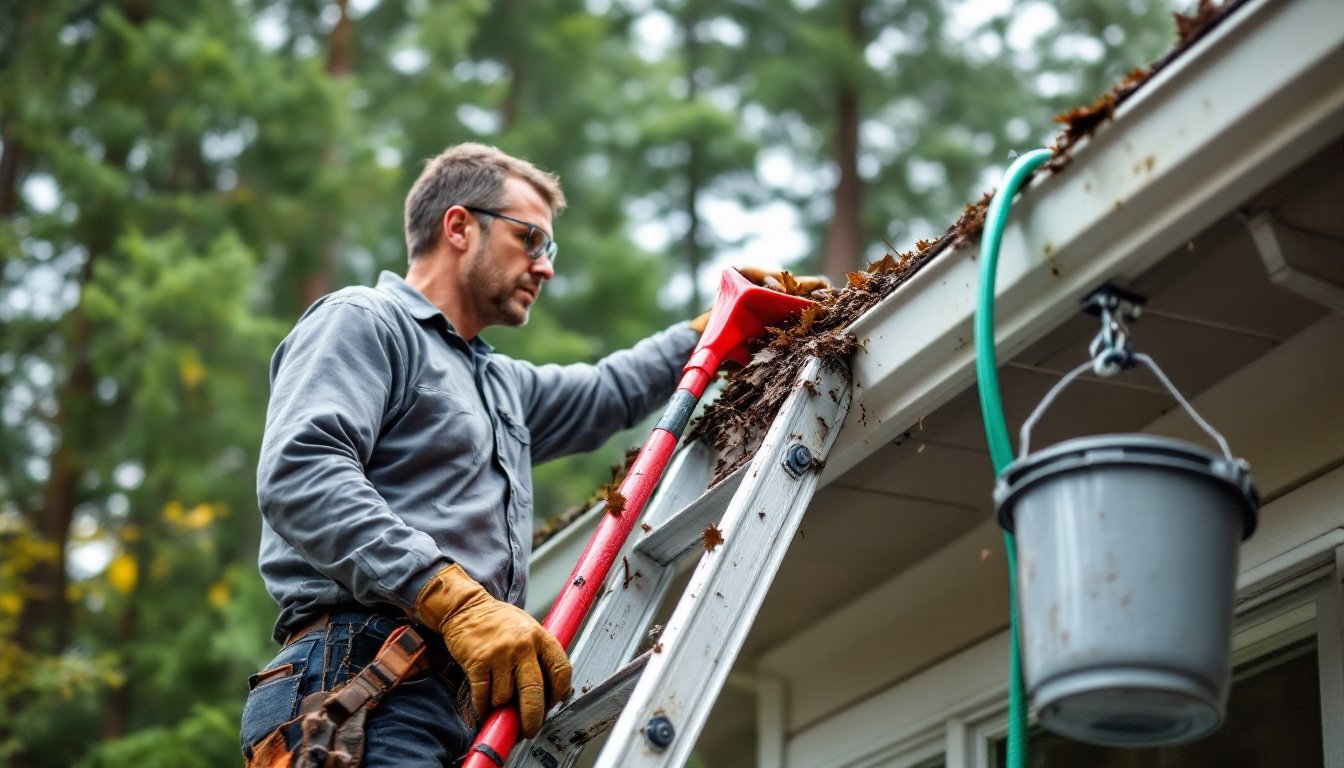
A sturdy extension ladder rated for at least 250 pounds (Type I) is non-negotiable. Place it on level ground and maintain three points of contact when climbing. Ladder stabilizers prevent gutter damage and provide safer positioning.
Gather these tools:
- Heavy-duty work gloves (leather or rubber-coated)
- Safety glasses or goggles
- Gutter scoop or plastic trowel
- 5-gallon bucket with S-hook
- Garden hose with spray nozzle
- Plumber’s snake (for downspout clogs)
- Dust mask or N95 respirator
Wear closed-toe boots with good tread, wet roof shingles and ladder rungs are slippery. Long sleeves protect against sharp gutter edges and insect bites. If the roof pitch exceeds 6/12 or the home is taller than one story, consider safety equipment beyond the scope of typical DIY work.
The Cleaning Process
1. Position and secure the ladder. Move it every 4-6 feet rather than overreaching. Never stand on the top two rungs.
2. Remove large debris by hand. Work away from downspouts, pushing material toward manageable piles. Drop debris into the bucket or onto a tarp below, never onto landscaping.
3. Scoop out remaining sludge. A plastic gutter scoop conforms to the gutter shape without scratching aluminum. Remove everything down to bare metal or vinyl.
4. Flush with water. Starting at the end opposite the downspout, spray toward the downspout opening. This reveals any remaining clogs and tests flow rate. Water should drain quickly without pooling.
5. Clear downspout blockages. If water backs up, detach the downspout and use a plumber’s snake or feed the hose up from the bottom. Stubborn clogs may require tapping the downspout exterior with a rubber mallet.
6. Inspect while cleaning. Check for rust spots, separated seams, loose hangers, and fascia rot. Small rust spots can be wire-brushed and painted. Loose spikes should be replaced with gutter screws, they resist pulling out better in Florida’s wet-dry cycles.
Expect to spend 2-3 hours on an average single-story home (150-200 linear feet of gutter). Two-story homes take considerably longer and present greater fall risk.
Safety note: If the homeowner feels uncomfortable at any point, especially on multi-story properties or steep roofs, professional services are worth the cost. Many gutter cleaning professionals in Jacksonville provide free estimates.
When to Hire Professional Gutter Cleaning Services in Jacksonville
Some situations demand professional help from the start. Two-story homes or those with roof pitches above 6/12 present serious fall hazards. Insurance claims related to ladder falls average over $40,000 in medical costs alone.
Hire a pro if the property has:
- Limited ladder access due to landscaping or architectural features
- Extensive fascia or soffit rot requiring repair
- Gutter sections needing realignment or replacement
- Multiple downspouts with buried drainage lines
- Heavy tree canopy requiring more than twice-yearly service
Professionals carry liability insurance and workers’ compensation, critical if someone is injured on the property. They also have truck-mounted vacuums, specialized ladders, and commercial-grade equipment that makes the job faster and more thorough.
Expect to pay $100-$250 for single-story cleaning and $200-$400 for two-story homes in the Jacksonville area, though prices vary by property size and condition. According to HomeAdvisor, the national average falls around $160, but coastal Florida rates run slightly higher due to demand and climate factors.
Look for licensed and insured companies with specific gutter cleaning experience. Ask whether the price includes downspout flushing, minor repairs, and disposal. Some services photograph problem areas and provide maintenance recommendations.
Many companies offer quarterly maintenance contracts at reduced per-visit rates. For properties with heavy debris accumulation, a contract ensures consistent service and often includes priority scheduling during hurricane season.
Preventing Future Gutter Problems: Maintenance Tips for Jacksonville Homes
Gutter guards significantly reduce cleaning frequency but don’t eliminate it entirely. Mesh-style guards work well for oak leaves but can trap pine needles. Reverse-curve (surface tension) guards handle high water volume better but cost more, typically $8-$12 per linear foot installed.
Brush guards fit inside gutters and are easier to install DIY, but they still catch debris and need periodic removal for cleaning. No guard system is perfect for Jacksonville’s climate: expect to clean annually even with guards installed.
Trim tree branches that overhang the roof by at least 6 feet. This reduces debris and limits wildlife access. For large oaks, hire a certified arborist, improper pruning harms tree health and mature oak removal requires permits in some Jacksonville neighborhoods.
Inspect gutter hangers yearly. In Florida’s heat cycles, metal expands and contracts, loosening fasteners. Replace old gutter spikes with screws driven into rafters rather than just fascia. Space hangers every 24 inches instead of the standard 36 inches to handle Florida’s heavy rainfall.
Check caulk and seams where gutter sections meet. UV exposure degrades silicone caulk within 3-5 years. Clean the area, dry thoroughly, and apply fresh gutter sealant rated for exterior use. This prevents small leaks that escalate into fascia damage.
Extend downspouts at least 6 feet from the foundation. Splash blocks aren’t sufficient for Jacksonville’s rainfall intensity, use solid extensions or flexible corrugated pipe. Slope should drain water away from the house at a minimum 2% grade.
Flush gutters with a hose monthly during peak debris seasons. This 10-minute task catches developing clogs before they become major problems. According to resources on ImproveNet, preventive maintenance saves homeowners an average of $1,200 in repairs over five years compared to reactive-only approaches.
Consider upgrading to 6-inch gutters if the current 5-inch system consistently overflows even though being clean. The larger capacity handles Jacksonville’s intense downpours better, especially on roof sections with valleys that concentrate water flow.