Houston’s high humidity, aging infrastructure, and dense clay soil create a perfect storm for drain problems. Tree roots infiltrate sewer lines, mineral buildup narrows pipes, and sudden downpours overwhelm systems designed decades ago. Whether it’s a slow-draining kitchen sink or a backed-up shower, knowing when to tackle the issue yourself and when to call for professional drain cleaning service Houston can save both money and headaches. This guide walks homeowners through the most common drain issues in the Houston area, effective DIY solutions, and how to choose a reliable drain cleaning Houston TX company when the snake won’t cut it.
Table of Contents
ToggleKey Takeaways
- Houston’s unique environment—high humidity, clay soil, and aggressive tree roots—creates distinct drain challenges that require targeted solutions rather than generic approaches.
- Drain cleaning Houston problems often stem from hard water deposits, grease buildup, and aging infrastructure; DIY methods like plunging and drain snakes work for minor clogs but professional hydro-jetting ($350-600) handles stubborn blockages chemical cleaners cannot.
- Multiple backed-up fixtures, persistent slow drains, gurgling sounds, or sewage odors indicate main line issues requiring immediate professional drain cleaning service Houston rather than repeated DIY attempts that risk pipe damage.
- Choosing a reliable drain cleaning company involves verifying Texas plumbing licenses, obtaining detailed written estimates ($150-300 for basic service), and confirming they have diagnostic equipment like video cameras for accurate problem identification.
- Simple preventive maintenance—installing drain screens, flushing with hot water weekly, avoiding grease disposal, and trimming tree roots near sewer lines—prevents the majority of drain emergencies and extends pipe lifespan in older Houston homes.
Common Drain Problems Houston Homeowners Face
Houston’s unique environment creates drain challenges that differ from drier climates. The region’s expansive clay soil shifts with moisture changes, putting stress on underground pipes and creating misaligned joints where debris accumulates. Live oak and magnolia roots aggressively seek water sources, infiltrating even small cracks in sewer lines.
Hard water deposits are another frequent culprit. Houston’s municipal water contains elevated levels of calcium and magnesium that gradually coat pipe interiors, narrowing flow capacity. Kitchen drains suffer most, as grease combines with minerals to form stubborn blockages.
Hair and soap scum dominate bathroom drain issues. The combination creates a sticky matrix that traps other debris. Older homes with cast iron or galvanized steel pipes face accelerated corrosion, creating rough interior surfaces where clogs form more easily.
Floor drains in garages and laundry rooms often dry out during Houston’s hot summers, allowing sewer gases to enter the home and debris to fall directly into the trap. After heavy rains, homeowners in low-lying areas may experience temporary backups when municipal storm systems reach capacity, though this typically indicates a need for backflow prevention rather than simple cleaning.
DIY Drain Cleaning Methods That Actually Work
Before calling for drain cleaning Houston TX services, homeowners can tackle many common clogs with the right approach and tools. Success depends on matching the method to the blockage type and location.
Natural Drain Cleaning Solutions
The classic baking soda and vinegar method works for light organic buildup but won’t touch grease or mineral deposits. Pour half a cup of baking soda down the drain, follow with a cup of white vinegar, wait 15 minutes, then flush with boiling water. The fizzing reaction loosens soap scum and minor debris.
For grease clogs, skip the vinegar. Instead, pour a half-gallon of boiling water directly down the drain, wait two minutes, then repeat. The heat liquefies grease enough to flush through. This works best as preventive maintenance rather than emergency treatment.
Enzyme-based drain cleaners use bacteria cultures to digest organic matter over 6-8 hours. They’re safer for pipes than chemical cleaners and effective on hair and food particles, but useless against tree roots or mineral buildup. Follow package directions exactly, these products need time to work.
Avoid chemical drain cleaners containing sodium hydroxide (lye) or sulfuric acid in older homes. They generate heat that can crack porcelain fixtures or corrode metal pipes. If you do use them, wear chemical-resistant gloves and safety goggles, ensure ventilation, and never mix products.
Mechanical Tools for Stubborn Clogs
A cup plunger (the standard red rubber type) creates pressure and suction that dislodges clogs within a few feet of the drain opening. Block overflow openings with a wet rag first, in sinks, this is the small hole near the rim. Create a seal, fill the fixture with enough water to cover the plunger cup, then use 15-20 vigorous strokes. A flange plunger works better for toilets due to the extended rubber sleeve.
For clogs beyond plunger reach, a drain snake (also called a drain auger) is essential. Hand-crank models with 25-foot cables handle most household needs. Feed the cable down the drain until you hit resistance, then crank clockwise while applying gentle forward pressure. The tip either breaks through the clog or hooks it for removal. Homeowners can find these at hardware stores for $15-40, and many plumbing tutorials demonstrate proper technique.
Zip-it tools, thin plastic strips with barbed edges, excel at pulling hair from bathroom drains. Insert the strip fully, twist slightly, then pull straight up. They’re disposable, cost about $2, and often work when nothing else will for shower clogs.
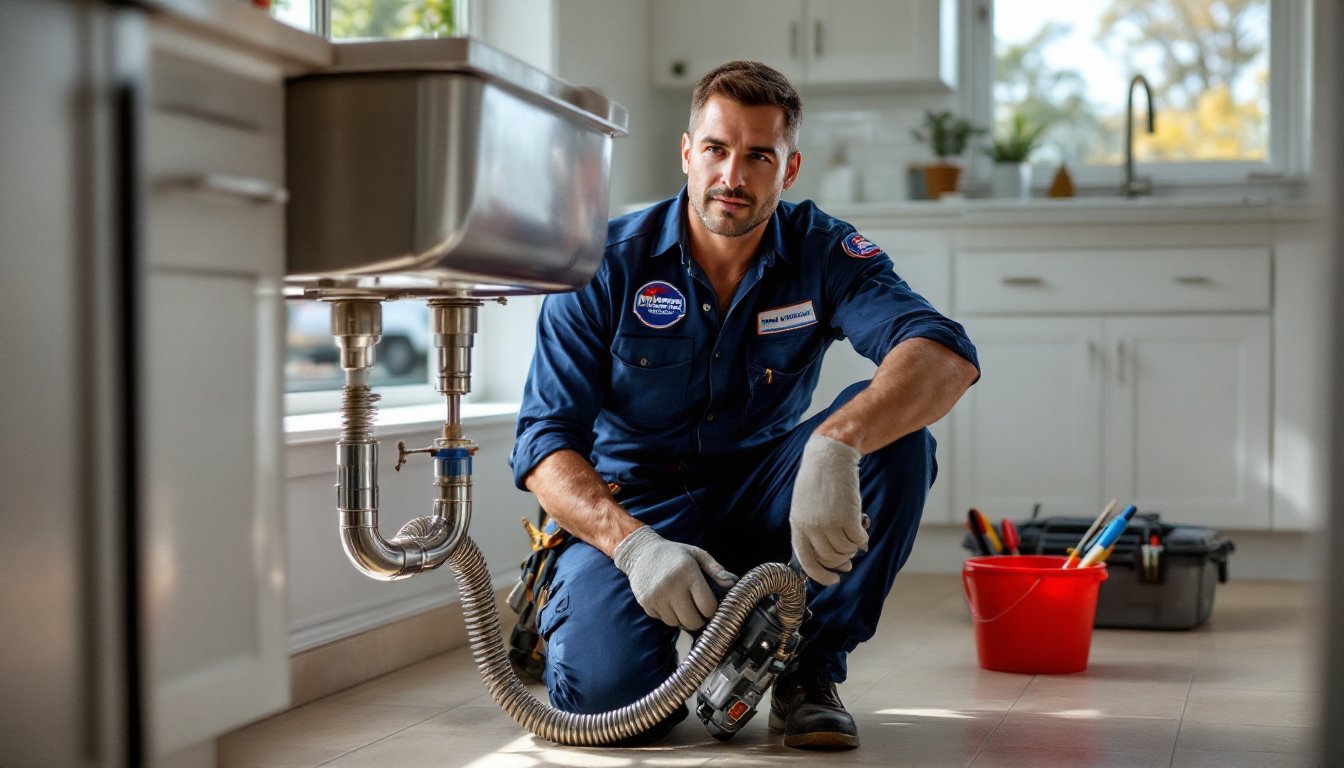
For kitchen sink P-traps (the curved pipe under the sink), sometimes direct removal is fastest. Place a bucket underneath, use slip-joint pliers or a pipe wrench to loosen the slip nuts at both ends, then pull the trap free. Clean it out, check for corrosion, and reassemble. Replace rubber washers if they’re cracked, they cost pennies and prevent leaks.
When to Call a Professional Drain Cleaning Service
Some situations exceed DIY capabilities and require professional drain cleaning service Houston. Recognizing these scenarios early prevents property damage and costly emergency calls.
Call immediately if multiple fixtures back up simultaneously. This indicates a main sewer line blockage, often caused by tree roots or collapsed pipes. Attempting DIY fixes wastes time while sewage risks backing into the home.
Persistent slow drains that return days after clearing suggest problems deeper in the system. Professional hydro-jetting uses high-pressure water streams (up to 4,000 PSI) to scour pipe interiors, removing scale, grease, and root intrusions that snakes can’t touch. According to data from professional plumbing services, hydro-jetting typically costs $350-600 but clears pipes more thoroughly than mechanical methods.
Standing water that won’t drain at all, especially in basement floor drains or the lowest fixtures in the home, may indicate a main line blockage or municipal system backup. Some homes need backflow preventers, one-way valves that stop sewage from flowing backward during heavy rains. Installation requires a plumber and often a permit.
If you hear gurgling sounds from drains or toilets when using other fixtures, the drainage system isn’t venting properly. This might be a clog in the vent stack (the pipe that extends through the roof) or a more complex venting issue. Roof work and diagnostic equipment make this a job for professionals.
Sewage odors that persist after cleaning P-traps suggest cracked pipes, failed wax rings under toilets, or dry traps in rarely used drains. A licensed plumber can perform a smoke test or camera inspection to locate the source.
Finally, if you’ve already snaked a drain multiple times and the clog returns within days, stop. Repeated snaking can damage pipes, especially older cast iron or clay lines. A video camera inspection costs $200-400 and reveals the actual problem, whether it’s root infiltration, bellied pipes, or structural damage.
How to Choose the Right Drain Cleaning Company in Houston
Houston has hundreds of plumbing companies offering drain cleaning Houston services. Choosing the right one requires evaluating credentials, pricing transparency, and service scope.
Start with licensing and insurance verification. Texas requires plumbers to hold a license from the Texas State Board of Plumbing Examiners. Ask for the master plumber’s license number and verify it at the state board’s website. Liability insurance protects homeowners if the company damages pipes or property during service.
Get detailed written estimates before work begins. Reputable companies provide flat-rate pricing or clear hourly rates plus trip fees. According to estimates from home service platforms, basic drain cleaning in Houston typically runs $150-300 for straightforward clogs, while main line cleaning with hydro-jetting costs $350-600. Be skeptical of quotes far below market rates, they often add charges mid-job.
Ask about diagnostic capabilities. Companies with video camera inspection equipment can show you exactly what’s blocking the line and its location. This prevents unnecessary exploratory digging and provides documentation if pipe replacement becomes necessary.
Check for 24/7 emergency availability if you’re dealing with backups or overflows. Standard business hours are fine for slow drains, but sewage backing into the home requires immediate response. Confirm emergency rates upfront, they’re typically 1.5x to 2x regular pricing.
Review online ratings on multiple platforms, but read beyond star counts. Look for patterns in complaints: Does the company upsell aggressively? Do they stand behind warranties? How do they handle damage claims? A few negative reviews among hundreds are normal: consistent complaints about the same issue are red flags.
Ask if they offer maintenance plans or warranties. Some companies provide annual contracts with scheduled inspections and cleaning, which can extend pipe life. Warranties on cleaning work typically last 30-90 days, meaning they’ll return at no charge if the same clog recurs.
Finally, confirm they have the right equipment for your specific problem. A company that only offers cable snaking can’t address scale buildup or root masses. If you have older pipes, ask if they use protective measures to avoid damaging corroded interiors.
Preventive Maintenance Tips to Keep Your Drains Clear
Regular maintenance prevents most drain emergencies and extends the life of Houston’s aging plumbing infrastructure. These practices take minutes but save hundreds in repair costs.
Install drain screens in all sinks, tubs, and showers. Fine mesh screens ($3-8 each) catch hair, food particles, and debris before they enter pipes. Clean them weekly, it’s faster than snaking drains.
Flush drains with hot water weekly. Boil a half-gallon of water and pour it down kitchen and bathroom drains to melt soap scum and grease before they solidify. Do this after the last use of the day so hot water sits in pipes overnight.
Never pour cooking grease or oil down drains. Even with hot water, fats solidify as they cool in pipes. Instead, pour grease into a disposable container, let it solidify, then trash it. Wipe greasy pans with paper towels before washing.
Run water for 30 seconds after using the garbage disposal. Many clogs happen because users turn off water too soon, leaving food particles stuck in pipes. Cold water is better than hot, it solidifies grease so the disposal can chop it rather than letting it coat pipes.
Flush rarely used drains monthly. Pour a gallon of water down floor drains, basement sinks, and guest bathroom fixtures to keep P-traps filled. Dry traps allow sewer gases into the home and create entry points for debris.
Trim tree roots near sewer lines. Live oaks, magnolias, and willows are beautiful but aggressive. Their roots can infiltrate pipes through joints or small cracks. If trees grow within 10 feet of your sewer line, schedule a camera inspection every 2-3 years to catch intrusions early.
Consider annual professional cleaning for main sewer lines, especially in homes over 30 years old. A preventive hydro-jetting service costs $300-500 but removes buildup before it becomes a blockage. Many companies offer this as part of maintenance contracts.
Avoid flushable wipes, feminine products, and paper towels. Even though packaging claims, these don’t break down like toilet paper and cause frequent backups. Stick to toilet paper only.
Finally, know where your main sewer cleanout is located. It’s typically a capped pipe near the home’s foundation or in the basement. If a backup occurs, you can remove the cap to relieve pressure and prevent sewage from entering living spaces. Mark its location so you or a plumber can access it quickly during emergencies.