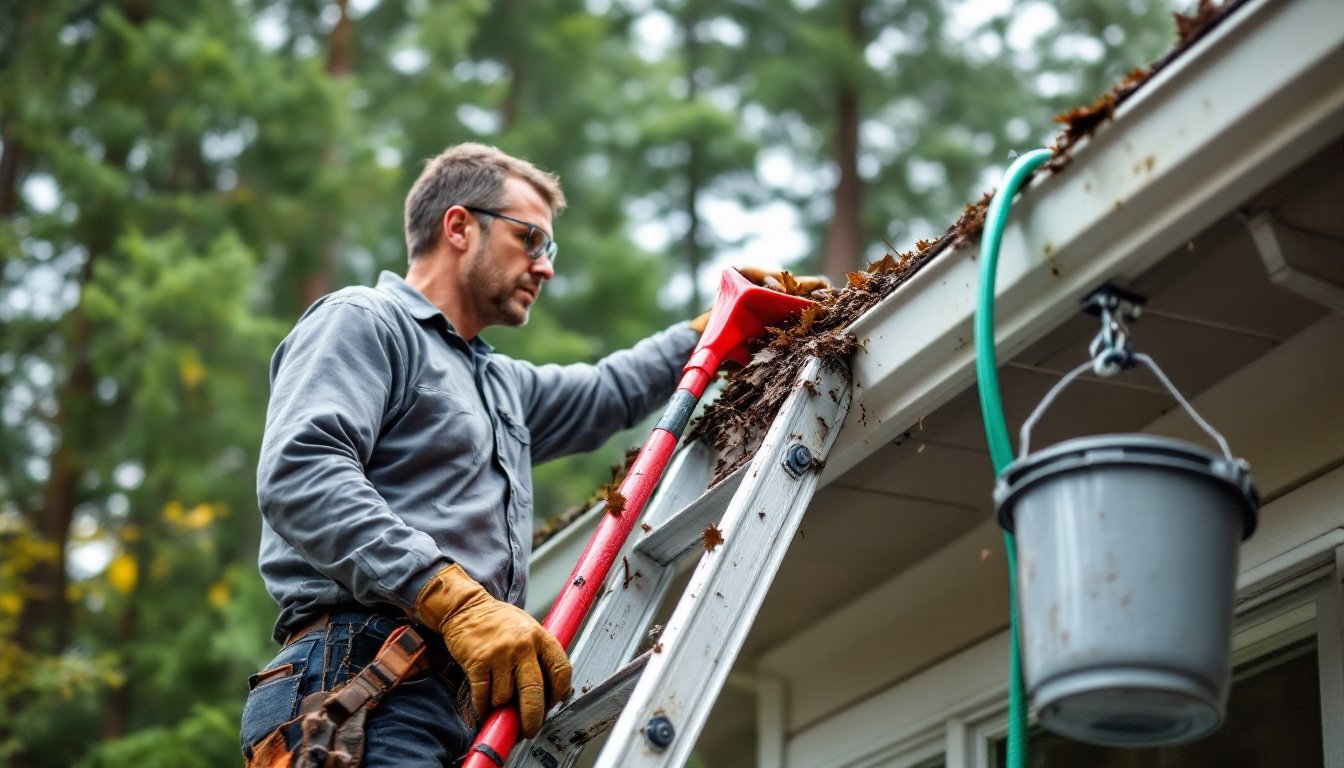
In Greenville, SC, where spring storms and heavy summer downpours are the norm, neglected gutters can spell disaster for a home’s foundation, siding, and landscaping. The city’s humid subtropical climate means gutters don’t just clog, they become breeding grounds for mosquitoes and mildew while ice dams threaten winter integrity. Whether tackling the job yourself or hiring a pro, understanding local conditions and maintenance cycles keeps water flowing where it should: away from the structure. This guide walks through everything Greenville homeowners need to know about gutter cleaning, from seasonal timing to cost expectations and prevention strategies that actually work.
Table of Contents
ToggleKey Takeaways
- Gutter cleaning in Greenville, SC is essential twice yearly—mid-May and mid-November—to prevent foundation damage, mold growth, and mosquito breeding from heavy local rainfall and debris accumulation.
- Clogged gutters can lead to serious structural damage including basement seepage, wood rot, compromised shingles, and algae-stained siding, making regular maintenance a critical homeowner investment.
- Professional gutter cleaning in Greenville costs $125–$225 for single-story homes, with peak-season pricing 15–20% higher; spring scheduling and annual service contracts offer cost savings.
- DIY gutter cleaning requires proper safety equipment, a sturdy ladder, and careful technique to avoid injury; two-story homes and steep roofs are best left to professionals with insurance and equipment.
- Preventive measures like gutter guards, branch trimming, and downspout extensions reduce cleaning frequency and protect against ice dams, foundation erosion, and pest damage year-round.
Why Gutter Cleaning Is Essential for Greenville Homes
Greenville’s average annual rainfall hovers around 48 inches, with May and July delivering the heaviest precipitation. When gutters fill with pine needles, oak leaves, and sweetgum balls, common culprits in upstate South Carolina, water overflows and pools against foundation walls. Over time, this causes basement seepage, eroded soil around footings, and cracked foundation concrete.
Clogged downspouts also accelerate fascia and soffit rot. Water trapped in gutters seeps behind the drip edge, saturating wood trim and inviting carpenter ants and termites. In winter, standing water freezes, creating ice dams that lift shingles and compromise roof decking. Even a single freeze-thaw cycle can dislodge granules from asphalt shingles, shortening roof lifespan by years.
Beyond structural damage, stagnant gutter water becomes a mosquito hatchery. Greenville’s warm, humid springs provide ideal breeding conditions, turning neglected gutters into a public health nuisance. Regular cleaning eliminates larvae habitat and reduces West Nile virus risk, a concern the South Carolina Department of Health and Environmental Control monitors closely.
Finally, overflowing gutters stain siding with algae and mildew. Vinyl siding shows dark streaks: brick develops efflorescence. Cleaning gutters twice yearly prevents these cosmetic issues and preserves curb appeal and resale value.
When to Schedule Gutter Cleaning in Greenville’s Climate
Greenville homeowners should clean gutters twice annually: late spring (mid-May) and late fall (mid-November). Spring cleaning removes oak and pine pollen, flower debris, and bird nesting materials that accumulate during March and April. Fall cleaning tackles the bulk of leaf drop from deciduous trees, maples, oaks, and sweet gums shed heavily from October through early December.
Homes surrounded by pine trees need a third cleaning in late winter (February). Pine needles fall year-round but peak during winter dormancy. Their waxy coating makes them cling together, forming dense mats that block downspout outlets and trap moisture.
After severe weather events, tropical storms, hurricanes, or ice storms, inspect gutters immediately. Wind-driven rain often deposits twigs, shingle granules, and roofing debris. According to routine maintenance schedules, post-storm checks prevent secondary damage by clearing blockages before the next rainfall.
Spring pollen season in Greenville runs from March through May. Yellow pine pollen coats everything, including gutter interiors. If left unchecked, pollen mixes with moisture to form a sticky sludge that hardens like cement, requiring scraping rather than simple flushing. Schedule the first annual cleaning after pollen levels drop but before summer thunderstorms begin.
DIY Gutter Cleaning: Step-by-Step Guide for Greenville Homeowners
Start by gathering materials: a sturdy extension ladder rated for your weight plus 50 pounds, a 5-gallon bucket with an S-hook, a gutter scoop (plastic works better than metal to avoid scratching), a garden hose with a spray nozzle, and tarps to protect landscaping below.
-
Position the ladder safely. Set it on level ground at a 75-degree angle (about one foot out for every four feet up). Never lean past the ladder rails, climb down and reposition frequently. On soft soil, use a plywood base to prevent sinking.
-
Remove large debris by hand or scoop. Work toward downspouts, dropping debris into the bucket. Wet leaves compact: dry debris weighs less but scatters. Wear work gloves, decomposed leaves harbor mold spores and sharp twigs.
-
Flush gutters with a garden hose. Start at the high end, opposite the downspout. Use moderate pressure to push remaining sediment toward the outlet. If water pools, there’s a clog or improper slope (gutters should pitch 1/4 inch per 10 feet toward downspouts).
-
Clear downspout blockages. If water doesn’t drain, remove the elbow at the top of the downspout and use a plumber’s auger or a blast from a hose nozzle inserted from the bottom. For stubborn clogs, disassemble downspout sections.
-
Inspect for damage. Look for loose hangers, sagging sections, rust spots on steel gutters, or separated seams. Tighten screws, seal joints with gutter sealant (not silicone, it degrades in UV), and note any areas needing professional repair.
Safety Tips and Equipment You’ll Need
Wear safety goggles and a dust mask, dried debris releases mold spores and rodent droppings. Non-slip work boots with ankle support reduce ladder falls. Avoid cleaning gutters alone: have someone steady the ladder and hand up tools.
Never clean gutters during or immediately after rain, wet leaves are slippery, and metal ladders conduct electricity during thunderstorms. For two-story homes, consider a standoff stabilizer (ladder arm) to keep the ladder away from gutters and provide a safer working angle. If the roof pitch exceeds 6/12 or gutters are above 20 feet, hire a professional, fall injuries aren’t worth the DIY savings.
Avoid pressure washers inside gutters. The force can separate seams, bend hangers, or drive water under shingles. A standard garden hose provides enough pressure to flush sediment without risking damage.
How to Choose a Professional Gutter Cleaning Service in Greenville
Start by verifying liability insurance and workers’ compensation coverage. Request certificates of insurance directly from the carrier, don’t rely on contractor-provided photocopies. Greenville’s municipal code doesn’t require gutter cleaning licenses, but reputable contractors carry at least $1 million in general liability coverage.
Ask about the scope of service. Basic cleaning should include debris removal, downspout flushing, and a post-cleaning inspection report with photos. Some companies offer minor repairs (reattaching hangers, sealing leaks) as add-ons. Clarify what’s included in the base price versus upsells.
Check online reviews on contractor directories and the Better Business Bureau. Look for patterns: Do they show up on time? Do they damage landscaping? Do they pressure-sell gutter guards? A few negative reviews are normal, but consistent complaints about hidden fees or poor communication are red flags.
Get three written estimates. Prices vary based on linear footage, gutter height, and property access. A legitimate estimate includes the address, itemized services, total cost, and payment terms. Be wary of contractors who quote over the phone without seeing the property, complex rooflines, heavy tree cover, and gutter condition all affect pricing.
Ask if they use subcontractors. Some companies dispatch independent crews who may lack insurance or training. Confirm the crew working your home is covered under the contractor’s policy. For multi-story homes, verify they have proper ladder equipment or lift access, bucket trucks are safer and faster for tall structures.
Finally, avoid door-to-door solicitors and high-pressure sales tactics. Established Greenville contractors don’t need to cold-call neighborhoods. If someone offers an immediate discount for signing today, walk away.
Cost of Gutter Cleaning Services in Greenville SC
As of 2026, professional gutter cleaning in Greenville averages $125 to $225 for a single-story home with 150 to 200 linear feet of gutters. Two-story homes with 250 to 300 linear feet typically run $200 to $350. Prices increase for properties with steep roofs, heavy debris, or difficult access.
Many companies charge by linear foot ($0.75 to $1.50 per foot) rather than flat rates. Add-ons like downspout flushing, minor repairs, or gutter whitening (removing exterior stains) cost extra, usually $25 to $75 per service. Homes surrounded by pine or oak trees may see surcharges for excessive debris removal.
Seasonal demand affects pricing. Late fall (October through December) is peak season: some contractors raise rates by 15% to 20% during high-demand months. Schedule spring cleanings in May or early June to avoid surcharges. According to cost guides from home service platforms, booking cleanings during off-peak periods can save 10% to 15%.
Annual service contracts often provide discounts. Committing to two cleanings per year typically reduces per-visit costs by $25 to $50. Some companies include free minor repairs or priority scheduling as contract perks. For homes with frequent clogs, contracts offer better value than per-visit pricing.
DIY cleaning costs almost nothing, bucket, scoop, and hose are one-time purchases under $50 total. Renting an extension ladder runs $30 to $60 per day if needed. Factor in time (3 to 5 hours for a typical home) and physical effort. For homeowners uncomfortable with heights or lacking proper equipment, professional service justifies the expense through safety and thoroughness.
Preventing Gutter Clogs: Maintenance Tips for Year-Round Protection
Gutter guards reduce cleaning frequency but don’t eliminate it. Mesh screens, foam inserts, and reverse-curve systems each have trade-offs. Micro-mesh guards (stainless steel with 50-micron openings) block most debris but require occasional brushing to remove pollen buildup. Foam inserts trap small particles and degrade in UV after 3 to 5 years. Reverse-curve (helmet-style) guards shed leaves but let pine needles accumulate in the trough.
Install guards only after cleaning gutters thoroughly, trapping debris underneath defeats their purpose. Expect to pay $8 to $15 per linear foot installed for quality micro-mesh systems. DIY snap-in guards cost $1.50 to $3.50 per foot but may void gutter warranties if they damage hangers during installation.
Trim overhanging branches to reduce leaf and twig accumulation. Cut limbs back at least 6 feet from the roofline. This also prevents squirrels and raccoons from accessing the roof and nesting in gutters. Use a pole saw for high branches or hire a certified arborist for large trees near power lines.
Check gutter slope annually. Gutters should pitch 1/4 inch per 10 feet toward downspouts. Use a 4-foot level and a measuring tape. If sections have reverse slope (water pools away from outlets), adjust hanger spacing or replace sagging sections. Aluminum gutters are prone to warping under heavy debris loads: upgrading to 5-inch K-style gutters with hidden hangers improves structural stability.
Downspout extensions direct water at least 6 feet from the foundation. Flexible corrugated extensions work but kink and trap debris. Rigid PVC or hinged extensions are more durable. Bury downspout discharge lines 12 to 18 inches deep, sloped away from the house, to prevent erosion and foundation settlement.
Inspect gutters after storms, even if cleaning isn’t due. A quick visual check from the ground reveals obvious clogs or damage. Use binoculars to spot sagging sections or vegetation growing in gutters, moss and weeds indicate standing water and poor drainage. Address issues immediately rather than waiting for scheduled maintenance.