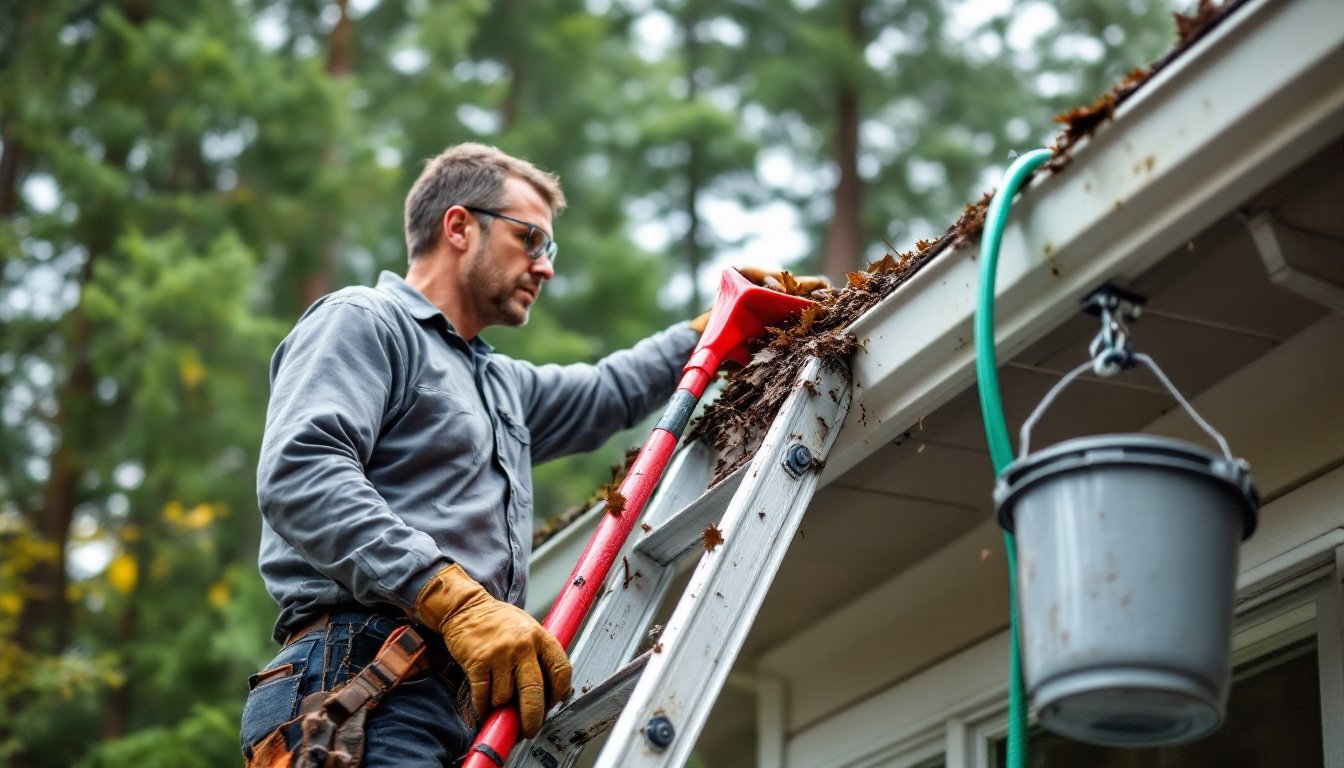
Gutters don’t earn much attention, until they fail. In Lexington, Massachusetts, where fall leaves pile thick and winter freeze-thaw cycles hammer rooflines, clogged gutters lead to basement flooding, ice dams, and rotted fascia boards faster than most homeowners expect. This guide walks through why gutter maintenance matters in this specific climate, when to clean (or hire out), and how to tackle the job safely whether you’re climbing the ladder yourself or vetting a local contractor.
Table of Contents
ToggleKey Takeaways
- Gutter cleaning in Lexington, MA is critical because fall leaves and freeze-thaw cycles cause clogged gutters, leading to basement flooding, ice dams, and foundation damage costing $3,000–$15,000 to repair.
- Schedule gutter cleaning at least twice yearly: late November (before winter storms) and early April (after winter debris accumulation), with additional inspections after major storms.
- DIY gutter cleaning saves $100–$250 per service if you have proper equipment and safe ladder practices, but multi-story homes or steep rooflines warrant hiring a professional gutter cleaning contractor.
- Professional gutter cleaning services in Lexington typically cost $100–$250 for single-story homes and $200–$400 for two-story homes, with November being peak booking season.
- Gutter guards reduce debris but aren’t maintenance-free; combining guards with annual inspections, downspout extensions (6 feet from foundation), and branch trimming minimizes future clogging and extends gutter lifespan.
- Ignoring gutter maintenance can void homeowners insurance claims if water damage is deemed a result of deferred maintenance rather than a sudden event.
Why Gutter Cleaning Is Critical for Lexington Homes
Lexington sits in a microclimate where oak, maple, and pine trees dominate residential lots. That canopy dumps a year-round supply of leaves, seed pods, and pine needles into gutters. When debris builds up, rainwater overflows and runs down exterior walls, soaking into siding and seeping behind foundation grout.
Foundation damage is the primary risk. Lexington’s clay-heavy soil doesn’t drain quickly, so overflowing gutters saturate the ground along foundation walls. Hydrostatic pressure pushes moisture through basement walls, leading to efflorescence, mold, and structural cracking. Fixing a compromised foundation costs $3,000 to $15,000, far more than routine gutter maintenance.
Ice dams form when clogged gutters trap snowmelt. Water backs up under shingles, leaks into attic spaces, and damages insulation and drywall. Lexington’s winter temperatures hover around freezing for weeks, creating ideal conditions for repeated freeze-thaw cycles that worsen the problem.
Fascia and soffit rot accelerates when water spills over gutter edges. Wood trim absorbs moisture, inviting carpenter ants and decay. Replacing fascia boards runs $6–$20 per linear foot, plus labor, a repair that’s entirely preventable with clean gutters.
Negligence also voids some homeowners insurance claims. If an insurer determines that water damage resulted from deferred maintenance rather than a sudden event, coverage may be denied.
When to Schedule Gutter Cleaning in Lexington
Lexington homeowners should clean gutters at least twice per year, but tree cover and storm frequency often demand more.
Best Times of Year Based on New England Weather
Late fall (November) is the most critical cleaning window. Deciduous trees drop leaves from late October through mid-November. Waiting until after the last leaves fall ensures gutters are clear before winter storms arrive. Don’t delay past Thanksgiving, frozen ground and icy ladders make late-season cleaning dangerous.
Early spring (April) is the second essential service. Winter storms deposit twigs, shingle granules, and ice-damaged debris. Spring cleaning prepares gutters for April showers and prevents clogs when rainfall peaks.
Optional mid-season checks in June and September help if your property has heavy pine or oak coverage. Pine needles don’t fall all at once: they shed steadily and mat into a dense layer that blocks water flow. Homes near conservation land or wooded lots benefit from quarterly inspections.
After major storms, inspect gutters within 48 hours. Nor’easters and summer thunderstorms drop branches and fill gutters with shredded leaves. A quick visual check from the ground, look for sagging sections or water stains on siding, tells you whether immediate cleaning is needed.
Ignore calendar-based advice if you spot these warning signs: water spilling over gutter edges during rain, plants growing from gutters, or visible debris from ground level. Those conditions demand immediate attention regardless of season.
DIY Gutter Cleaning: Step-by-Step Guide for Lexington Homeowners
Cleaning gutters yourself saves $100–$250 per service, but requires safe ladder work and tolerance for muck. This is a cosmetic maintenance task, not structural work, so no permit is required.
Materials and tools:
- Extension ladder rated for your weight plus 50 pounds (Type I or Type IA)
- Work gloves (rubber-dipped or leather: avoid cloth, they soak through)
- Gutter scoop or garden trowel
- 5-gallon bucket with an S-hook to hang from the ladder
- Garden hose with spray nozzle
- Safety glasses (debris falls toward your face when scooping)
- Ladder stabilizer or standoff to prevent gutter crushing
Step-by-step process:
-
Set up the ladder safely. Position it on firm, level ground. The base should sit one foot out for every four feet of height. Use a ladder stabilizer to span the gutter and rest against the wall, protecting aluminum gutters from denting.
-
Scoop out debris. Start near a downspout and work away from it. Use the scoop to pull out matted leaves and sediment. Drop debris into the bucket, not onto the ground, saves cleanup time later. According to Family Handyman, homeowners often underestimate how much sludge accumulates in just six months.
-
Clear downspouts. If water doesn’t flow freely, the downspout is clogged. Remove the bottom elbow if accessible, then snake a plumber’s auger or spray the hose upward from the bottom opening. For stubborn clogs, disassemble the downspout sections, they’re held by sheet-metal screws.
-
Flush with a hose. Starting at the end opposite the downspout, spray water toward the outlet. Watch for leaks at seams and corners. Properly functioning gutters slope ¼ inch per 10 feet toward downspouts. If water pools, hangers may have failed or the gutter may have bent.
-
Inspect for damage. Look for rust holes, separated seams, or loose hangers. Small holes can be patched with gutter sealant (not silicone caulk, which doesn’t flex). Sagging sections need new hangers spaced every 24 inches.
Safety notes: Never lean sideways from the ladder, reposition it instead. Avoid cleaning gutters alone: have someone nearby in case of a fall. If your home exceeds two stories or the roofline is steep, hire a pro. Extension ladders become unstable above 24 feet, and most homeowner-grade ladders aren’t rated for that height.
Alternative tools: A leaf blower with a gutter attachment speeds the job but creates a dust cloud, wear a mask. A pressure washer gutter wand works for light debris but lacks the force to clear compacted sludge.
Hiring Professional Gutter Cleaning Services in Lexington MA
Professional gutter cleaning makes sense for multi-story homes, steeply pitched roofs, or homeowners who can’t safely handle ladder work. Lexington has several established services with insurance and track records.
What pros offer beyond DIY:
- Liability coverage: Licensed contractors carry insurance that covers falls and property damage.
- Proper equipment: Commercial stabilizers, harnesses, and extended reach tools access difficult sections.
- Inspection reports: Many services photograph problem areas and provide written assessments of gutter condition, fascia integrity, and downspout discharge.
Vetting a contractor:
- Verify they carry general liability insurance and workers’ compensation. Ask for certificate numbers.
- Check references or reviews on local platforms. Lexington residents often share contractor experiences on town Facebook groups and local gutter cleaning directories.
- Ask whether the quote includes downspout clearing and debris haul-away. Some companies charge extra for downspout service.
- Confirm they’ll inspect and document gutter condition. A thorough service includes photos of problem spots.
What to Expect in Terms of Cost
Pricing in Lexington typically runs $100–$250 for a single-story, 1,500-square-foot home with standard gutter length (150–200 linear feet). Two-story homes or properties with complex rooflines cost $200–$400.
Factors that increase price:
- Height and pitch: Second-story gutters or roofs steeper than 6/12 pitch add $50–$100.
- Tree cover: Homes surrounded by oaks or pines require more time to clear compacted debris.
- Repairs: Gutter resealing, hanger replacement, or minor fascia work adds $50–$150 per issue.
- Access challenges: Homes with steep slopes, decks blocking ladder placement, or landscaping in the way incur surcharges.
Seasonal demand affects pricing. November is peak season in Lexington, many contractors book solid by mid-October. Scheduling in early spring or late summer often yields lower rates and faster availability.
Compare at least three quotes. According to industry platforms like HomeAdvisor, Lexington’s average cost aligns with greater Boston pricing but runs 10–15% higher than rural Massachusetts towns due to labor costs.
Beware of lowball quotes under $75 for a full-size home. That pricing usually signals uninsured operators or services that don’t include downspouts or haul-away.
Preventing Future Gutter Problems: Maintenance Tips for Lexington Residents
Proactive maintenance stretches gutter lifespan and reduces cleaning frequency. These measures are especially valuable in Lexington’s leaf-heavy environment.
Gutter guards reduce debris accumulation but don’t eliminate cleaning. Options include:
- Mesh screens: Affordable ($1–$2 per linear foot) and DIY-friendly. They block large leaves but let pine needles and shingle grit through.
- Reverse-curve systems: Water flows over a curved hood while leaves slide off. Effective but expensive ($5–$10 per foot installed) and prone to ice buildup in winter.
- Micro-mesh: Fine stainless-steel mesh blocks even small debris. Costs $3–$5 per foot but requires annual rinsing to prevent sediment buildup on the mesh surface.
No gutter guard is maintenance-free. Plan to rinse or brush guards annually and inspect for clogs at downspouts.
Trim overhanging branches to reduce leaf drop. Keep tree limbs at least 6 feet from the roofline. This also prevents squirrels and raccoons from accessing the roof and nesting in soffits.
Check gutter slope annually. Gutters should pitch ¼ inch per 10 feet toward downspouts. If water pools, adjust hanger spacing or replace bent sections. Pooled water freezes in winter, bending aluminum gutters and cracking seams.
Extend downspouts to discharge water at least 6 feet from the foundation. Use rigid downspout extensions or bury corrugated drainage pipe that outlets into a dry well or daylight drain away from the house. Lexington’s clay soil doesn’t absorb runoff quickly, so proper downspout discharge is critical.
Inspect after storms. Walk the perimeter after heavy wind or snow. Look for sagging sections, detached hangers, or water stains on siding. Catching small issues early prevents expensive fascia or foundation repairs.
Seal seams and end caps. Aluminum gutters develop leaks at seams and corners over time. Apply gutter sealant (butyl-rubber-based) to reseal joints every 3–5 years. This costs $5–$10 in materials and prevents the need for full gutter replacement.
Homeowners who follow these practices typically reduce professional cleaning frequency from twice yearly to once, saving $100–$250 annually.