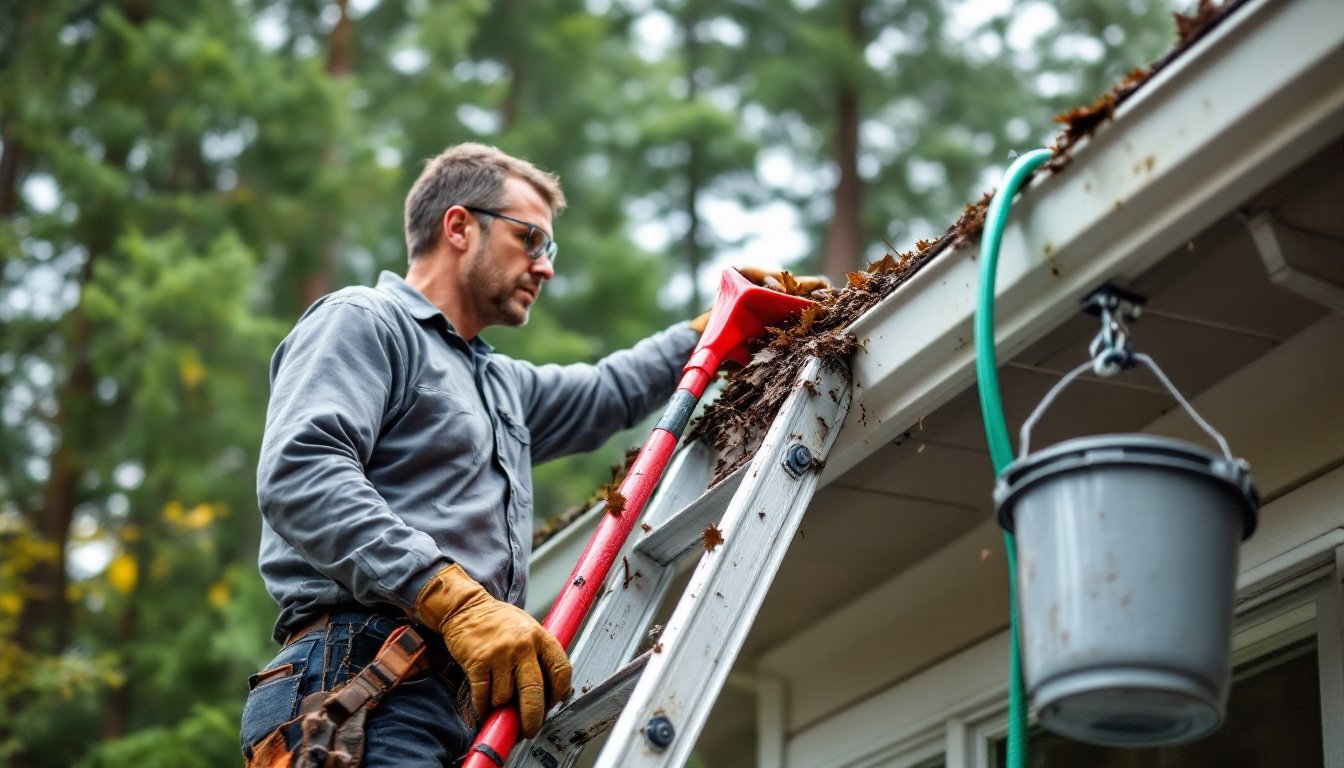
San Diego’s Mediterranean climate might not bring the leaf storms of New England, but homeowners here still face gutter challenges, eucalyptus debris, palm fronds, clay roof tiles shedding sediment, and months of bone-dry buildup that turns into cement when winter rains finally arrive. Neglected gutters don’t just overflow: they spill thousands of gallons onto your foundation, erode landscaping, and invite dry rot into fascia boards that cost $15–$25 per linear foot to replace. This guide walks through exactly when and how to clean gutters in San Diego’s unique environment, what tools actually work, and when it makes more sense to call in a pro than risk a ladder mishap.
Table of Contents
ToggleKey Takeaways
- San Diego gutter cleaning is essential twice yearly—in September–October before the rainy season and March–April after winter storms—to prevent foundation damage, fascia rot, and pest infestations that cost thousands to repair.
- Neglected gutters overflow even in San Diego’s dry climate due to eucalyptus debris and pine needles; just a quarter-inch of buildup reduces flow capacity by 40%, leading to structural damage when storms arrive.
- DIY gutter cleaning requires proper safety equipment including a stabilized extension ladder with standoff, gutter scoop, gloves, and PPE; for multi-story or steep-pitched roofs, hiring a licensed professional is safer and more cost-effective than risking falls.
- Micro-mesh gutter guards ($7–$12 per linear foot) combined with tree trimming at 6–10 feet clearance reduce maintenance frequency by 60–70%, while downspout extensions directing water at least 6 feet from the foundation prevent costly foundation problems in San Diego’s clay soils.
- Common red flags when hiring gutter cleaning contractors include quotes without site visits, below-market pricing, and lack of insurance proof—professional services typically run $120–$250 per cleaning and should include downspout flushing, debris haul-away, and photos of problem areas.
Why Gutter Cleaning Is Critical for San Diego Homes
San Diego homeowners often assume dry summers mean gutters stay clean. Not true. Eucalyptus bark strips, pine needles from coastal Torrey pines, and pollen buildup create a waxy mat that blocks downspouts the moment October rains hit.
Foundation damage tops the list of risks. A single inch of rain on a 1,500-square-foot roof generates roughly 935 gallons of runoff. When gutters overflow, that water pools against stucco and concrete foundations, seeping into hairline cracks. San Diego’s expansive clay soils swell when saturated, pushing against foundation walls and causing structural cracks that cost $4,000–$12,000 to underpin and repair.
Fascia and soffit rot follows close behind. Cedar and redwood fascia boards, common on older San Diego homes, absorb overflowing water and stay damp long enough for fungal decay to start. Once dry rot sets in, sections need replacement, not just patching.
Pest infestations thrive in clogged gutters. Roof rats, a persistent problem in neighborhoods near canyons, use debris-packed gutters as nesting material. Mosquitoes breed in standing water trapped behind clogs, even during San Diego’s short rainy season.
Landscape erosion might seem minor but adds up. A concentrated gutter overflow onto a hillside planter can wash away $500 in mulch, soil, and plants in a single storm. Hardscaping near downspouts, pavers, flagstone, shifts when undermined by erosion.
When to Clean Your Gutters in San Diego’s Climate
Most San Diego homeowners should clean gutters twice per year: once in late September or early October before the rainy season, and again in late March after winter storms wrap up.
Pre-rain cleaning (September–October) matters most. Even a quarter-inch of debris in a 5-inch K-style gutter reduces flow capacity by nearly 40%. When November’s first atmospheric river dumps 2+ inches in 24 hours, clogged gutters overflow immediately. Schedule this cleaning after deciduous trees drop leaves but before forecast models show storm systems approaching.
Post-rain cleaning (March–April) clears sediment that washes down from tile roofs and removes seedlings sprouting in trapped organic matter. If you’ve got mature trees overhanging the roofline, especially eucalyptus, sycamore, or live oak, add a mid-summer inspection in July. Bark and seed pods accumulate even without rain.
After wildfires or Santa Ana winds, inspect gutters within a week. Ash and airborne debris from regional fires settle in gutters and harden into a cement-like layer when wet. Santa Anas blow palm fronds, pine cones, and broken branches onto roofs: these lodge in valleys and corners.
Homes near Torrey Pines, Balboa Park, or canyon edges need more frequent checks, sometimes three or four times yearly. The dense tree canopy drops material year-round. According to cost estimation tools on platforms like HomeAdvisor, the average San Diego gutter cleaning runs $120–$225 for a single-story home, making routine maintenance far cheaper than emergency fascia repair.
DIY Gutter Cleaning: Step-by-Step Instructions
Essential Tools and Safety Equipment
Before climbing anything, gather the right gear. Cheap or missing tools turn a two-hour job into a dangerous half-day ordeal.
Ladder: Use a stabilized extension ladder, not a step ladder. For single-story homes, a 20-foot or 24-foot aluminum extension ladder works. Add a standoff stabilizer (about $30–$50) that holds the ladder away from the gutter, distributing weight onto the fascia instead of crushing the gutter edge. Never lean an unsecured ladder directly against gutters.
Hand tools: A gutter scoop (narrow plastic or metal trowel) reaches into corners better than gloved hands. A stiff-bristle scrub brush removes dried sediment. A 5-gallon bucket with a hook (or a bucket-on-a-rope system) saves dozens of ladder trips, hang it from a ladder rung and dump debris as you go.
Hose and nozzle: A standard garden hose with a high-pressure spray nozzle flushes downspouts. A gutter-flusher extension wand (telescoping pole with angled nozzle) lets you flush from the ground after the initial cleaning.
PPE (personal protective equipment): Wear safety glasses or goggles, dried debris and roofing grit fly into your face when scraped. Rubber-dipped work gloves protect against sharp metal edges, rusty screws, and decomposed organic matter that harbors bacteria. If you’re sensitive to mold or dust, add an N95 respirator. For multi-story homes, a safety harness anchored to a roof vent or structural point is non-negotiable: falls from second-story gutters cause serious injuries.
The Cleaning Process
-
Position the ladder safely. Set it on level ground. For every 4 feet of vertical height, the ladder base should sit 1 foot away from the wall (4:1 ratio). Have a helper foot the ladder or use ladder levelers on uneven terrain.
-
Remove large debris by hand. Starting at a downspout, scoop out leaves, twigs, and sediment. Work in 3- to 4-foot sections before repositioning the ladder, never overreach. Drop debris into the bucket or onto a ground tarp. Wet, compacted material weighs more than it looks: a full 5-gallon bucket of soaked leaves can hit 40+ pounds.
-
Scrub stubborn buildup. Eucalyptus sap and pine resin bond to aluminum gutters. Use the scrub brush and a little water to loosen it. Avoid metal scrapers on painted gutters, they scratch through the finish and expose bare metal to corrosion.
-
Flush the gutters. Once debris is removed, spray water from the high end (opposite the downspout) toward the outlet. Water should flow freely. If it pools or drains slowly, check the gutter slope. Gutters need a minimum 1/4-inch drop per 10 feet toward downspouts. Sagging sections need rehanger spikes or hidden hangers adjusted, this might require removing and resetting fasteners.
-
Clear downspouts. If water backs up at the outlet, the downspout is clogged. Disassemble the elbow at the top and use the hose or a plumber’s auger to push debris through. For stubborn clogs, tap the downspout with a rubber mallet while flushing, vibration helps dislodge compacted material. Downspout extensions should direct water at least 6 feet away from the foundation.
-
Inspect for damage. While up there, check for loose hangers, separated seams, rust-through holes (common on older galvanized steel gutters), and rotted fascia. Small holes can be patched with gutter sealant: larger issues need section replacement.
Disposal: Compost clean leaves if your city allows (San Diego’s Miramar Greenery accepts yard waste). Bag heavily decomposed material or debris mixed with roofing grit for trash pickup.
When to Hire a Professional Gutter Cleaning Service
Some jobs are better left to pros, and gutter cleaning crosses that line faster than most homeowners expect.
Multi-story homes top the list. A 24-foot extension ladder reaches a typical second-story gutter, but safe operation on slopes, decks, or near power lines takes training. Falls from second-story heights cause fractures, head trauma, and worse. If your roofline sits 20+ feet off the ground, hire out.
Steep or complex rooflines make DIY risky. Homes with 8:12 or steeper roof pitches, multiple valleys, or clay tile roofs (which crack under foot traffic) need professionals with proper anchoring systems and experience walking fragile surfaces. Many professional teams secure homeowners against liability for roof damage, DIY work doesn’t.
Physical limitations matter. Gutter cleaning requires carrying a 40-pound ladder, climbing while holding tools, and working overhead for 2–4 hours. If you have balance issues, joint problems, or vertigo, don’t gamble. Comparing local providers through directories like those on ImproveNet can help match you with vetted contractors based on project scope and budget.
Time and frequency trade-offs also come into play. If you’re cleaning gutters four times a year because of heavy tree cover, paying $150–$250 per visit adds up, but so does spending eight hours on ladders annually. Some homeowners find professionals worth it just for the time saved and the post-job guarantees.
When hiring, ask these questions: Are you licensed and insured (general liability and workers’ comp)? Will you flush downspouts and check for leaks? Do you haul away debris or leave it for the homeowner? Will you provide photos of problem areas (damaged hangers, fascia rot)? San Diego has many highly rated gutter cleaning specialists, and resources like Angi’s top-rated gutter cleaning pros provide verified reviews and customer feedback to simplify the vetting process.
Red flags: Anyone quoting without seeing the property, offering prices far below market average, or unwilling to provide proof of insurance. A cheap service that damages your roof or gets injured on your property becomes an expensive lawsuit.
Preventing Future Gutter Clogs in San Diego
The best gutter cleaning is the one you don’t have to do as often. A few prevention measures cut maintenance frequency in half.
Gutter guards divide into several types. Mesh screens (fine stainless steel or aluminum) block most debris but still need annual cleaning as small particles sift through. Reverse-curve (surface-tension) guards shed leaves but often let roof sediment and pine needles slip through. Foam inserts fit inside gutters and prevent large debris but degrade under UV within 2–4 years and trap fine particles, turning into sludge. Micro-mesh guards (surgical-grade stainless) perform best in San Diego’s environment, they stop pine needles, seed pods, and shingle grit while allowing water flow. Expect to pay $7–$12 per linear foot installed.
No guard is 100% maintenance-free. Plan to spray them off annually or brush away surface debris. Guards pay off most on homes surrounded by mature trees: on open-lot homes with minimal canopy, the cost doesn’t justify the marginal benefit.
Tree trimming makes a bigger difference than most realize. Trim branches to at least 6–10 feet of clearance above the roofline. This reduces leaf and twig accumulation by 60–70% and cuts down on rodent access. For large eucalyptus or oak trees, hire a certified arborist, improper cuts lead to disease or dangerous deadwood.
Downspout extensions prevent the secondary problem gutter cleaning aims to solve: foundation water intrusion. Flexible or rigid extensions should carry water at least 6 feet from the home’s perimeter, ideally into a gravel dry well, rain barrel, or sloped landscape area. In San Diego’s clay soils, improper drainage creates hydrostatic pressure against foundation walls.
Annual roof cleaning before gutter cleaning pays off. A light roof wash or blower session removes debris before it reaches the gutters. If you’ve got clay tiles, avoid pressure washing, it erodes the surface and shortens tile life. Use a leaf blower on a low setting or a soft broom.
Routine inspections catch problems early. Walk the perimeter of your home after every major rainstorm and look for: water staining on siding or fascia, pooling near the foundation, gutters pulling away from the roofline, and ice or water overflowing (rare in San Diego, but possible during unusually cold snaps). Fixing a loose hanger bracket costs $5 and ten minutes. Ignoring it leads to a detached gutter section and rotted fascia, $300+ repair.