When a drain backs up in a business, it’s not just an inconvenience, it’s a threat to operations, health codes, and revenue. Commercial plumbing systems handle exponentially more wastewater, grease, and debris than residential lines, making clogs faster-forming and more complex to clear. A restaurant kitchen drain that moves sluggishly can shut down service during peak hours. A retail storefront with sewage backup can send customers out the door permanently. Unlike home plumbing, commercial drain issues require specialized equipment, faster response times, and knowledge of code requirements that vary by jurisdiction and business type. Professional commercial drain cleaning services exist specifically to handle these high-stakes situations with tools and techniques that go far beyond a plunger.
Table of Contents
ToggleKey Takeaways
- Commercial drain cleaning services use specialized equipment like hydro-jetting (3,000–4,000 PSI) and motorized snakes to clear blockages far beyond residential plumbing capabilities.
- Early warning signs such as slow drainage, gurgling sounds, foul odors, and multiple fixture backups indicate your business needs professional drain cleaning to prevent costly operational shutdowns.
- Regular maintenance contracts cost significantly less than emergency service calls and downtime, while preventing damage to equipment, ensuring health code compliance, and extending plumbing infrastructure lifespan.
- Choose a commercial drain cleaning provider with verified licensing, commercial-specific experience in your industry, 24/7 emergency availability, and documented hydro-jetting and camera inspection capabilities.
- Grease buildup, tree root intrusion, foreign objects, and structural pipe damage are the most common commercial drain blockage causes that require professional diagnosis and specialized removal techniques.
What Are Commercial Drain Cleaning Services?
Commercial drain cleaning services are specialized plumbing companies or divisions that handle drainage systems in business, industrial, and institutional properties. Unlike residential drain services, commercial providers work with larger-diameter pipes (3-inch to 12-inch or greater), higher-volume discharge, and more complex plumbing networks that serve multiple fixtures simultaneously.
These services address issues in restaurants, hotels, hospitals, schools, manufacturing facilities, office buildings, and retail spaces. The work often requires after-hours scheduling to avoid disrupting business operations, and technicians must be familiar with grease interceptor cleaning, floor drain maintenance, backflow prevention, and compliance with local health department regulations.
Commercial providers typically offer emergency response (often 24/7), routine maintenance contracts, camera inspections, hydro-jetting, and root removal. They carry commercial-grade insurance and licensing to work on systems that, if mishandled, can cause significant property damage or code violations. Many also coordinate with facility managers and property owners to schedule preventive cleanings that align with health inspections or lease requirements.
Signs Your Business Needs Professional Drain Cleaning
Recognizing early warning signs can prevent full blockages and emergency shutdowns. Slow drainage is the most common red flag, if sinks, floor drains, or toilets take longer than usual to empty, buildup is restricting flow. Gurgling sounds from drains or toilets indicate trapped air caused by partial blockages downstream.
Frequent clogs, even after basic clearing attempts, suggest a deeper obstruction or systemic issue like root intrusion or collapsed pipe sections. Foul odors, particularly sewer gas smells, point to trapped organic matter or venting problems that can violate health codes and create unsafe conditions for employees and customers.
Water pooling around floor drains, grease traps, or external cleanouts signals an urgent problem. In food service environments, grease buildup can solidify in drain lines, requiring professional removal before it hardens completely. Multiple fixtures backing up simultaneously often means a main line blockage, not an isolated sink issue, this requires professional diagnosis and tools beyond what’s available to in-house maintenance staff.
If any drain-related issue interrupts business operations, the cost of downtime almost always exceeds the cost of calling a professional immediately rather than attempting DIY fixes that may worsen the problem.
Common Causes of Commercial Drain Blockages
Grease and cooking oil top the list in food service businesses. Even with grease traps in place, fats can coat pipes and harden over time, narrowing the effective diameter. Restaurants should trap grease before it reaches drain lines, but improper disposal or infrequent trap pumping leads to accumulation.
Food waste and organic debris from prep sinks, dishwashers, and floor drains contribute to blockages, especially in kitchens without proper strainers or garbage disposal units. Coffee grounds, rice, pasta, and fibrous vegetables are common culprits.
Foreign objects, sanitizer wipes (even those labeled “flushable”), mop strings, plastic gloves, and packaging materials, get flushed or rinsed into drains and snag on pipe joints or existing buildup. In healthcare facilities, medical waste disposal protocols are critical to prevent contamination and blockages.
Mineral deposits and scale form in areas with hard water, particularly in boilers, cooling systems, and restroom fixtures. Over years, calcium and lime buildup can reduce pipe capacity significantly.
Tree roots infiltrate underground sewer lines through joints or cracks, seeking moisture. Once inside, roots expand and trap debris, creating massive blockages. Older buildings with clay or cast-iron sewer lines are especially vulnerable.
Structural issues, collapsed pipes, misaligned sections from ground settling, or corroded cast iron, require camera inspection to diagnose. These aren’t cleaning issues: they’re repair or replacement jobs, but a professional service will identify them early.
Professional Techniques and Equipment Used
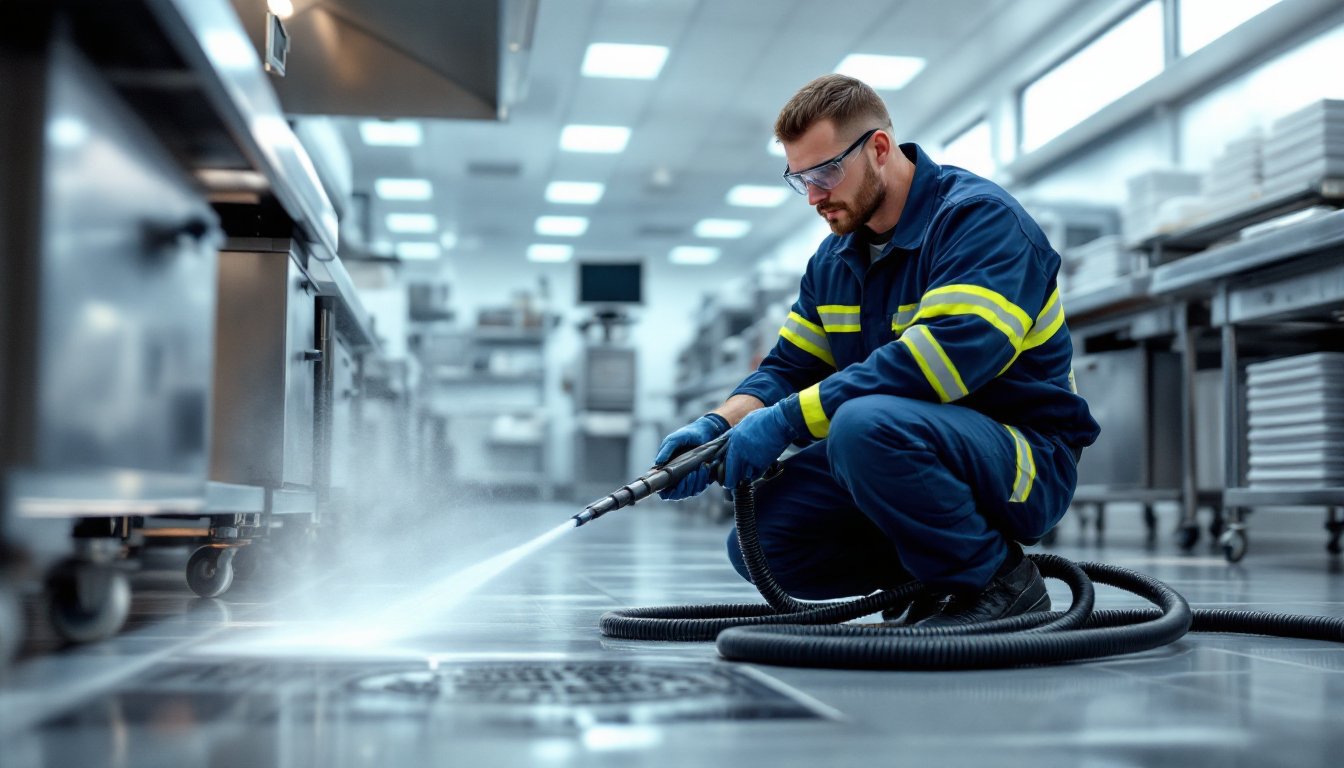
Commercial drain professionals rely on equipment far more powerful than residential-grade tools. Hydro-jetting uses high-pressure water streams (typically 3,000 to 4,000 PSI) to scour pipe walls clean, cutting through grease, scale, and even tree roots. This technique also flushes debris completely out of the system rather than just punching a hole through a blockage like a cable snake does.
Motorized drain snakes (cable augers) for commercial use feature heavier cables (up to 100 feet or more), larger cutting heads, and more torque than homeowner models. Technicians select specific auger heads, spear points for soft blockages, saw-tooth cutters for roots, or retrieving tools for foreign objects.
Video camera inspections use waterproof, LED-lit cameras on flexible cables to visually assess pipe interiors. This identifies the exact location and nature of blockages, pipe damage, or root intrusion without excavation. Footage can be provided to property owners, insurance companies, or engineers planning repairs.
Enzymatic and chemical treatments are sometimes used for ongoing maintenance, though professionals apply commercial-strength products and know which formulations are safe for specific pipe materials and local codes. Many jurisdictions restrict or prohibit certain drain chemicals, especially near septic systems or in food service.
Safety gear is non-negotiable: splash-proof goggles, chemical-resistant gloves, steel-toed boots, and in some cases respirators when working with sewer gases or confined spaces. Professionals also follow OSHA confined-space entry protocols when accessing manholes or large grease interceptors.
Benefits of Regular Commercial Drain Maintenance
Scheduled drain maintenance costs a fraction of emergency service calls and downtime. A quarterly or biannual hydro-jetting service keeps grease and debris from accumulating to problem levels, especially in restaurants where the volume of fats and solids is constant.
Preventing clogs protects expensive equipment. A backed-up floor drain in a commercial kitchen can flood prep areas, damage refrigeration units, and require deep facility cleaning to meet health codes again. Similarly, a clogged condensate drain on an HVAC system can cause water damage to ceilings and electrical systems.
Maintenance contracts often include camera inspections that catch early signs of pipe deterioration, root intrusion, or settling before they become emergencies. Knowing the condition of underground sewer lines helps property owners budget for repairs or replacements instead of facing sudden, unplanned expenses.
Compliance matters. Many municipalities and health departments require grease trap pumping and maintenance logs for food service businesses. Regular professional service ensures compliance and provides documentation during inspections.
Employee and customer safety improves when drains function properly. Sewage backups can introduce pathogens, and slow drains in restrooms create unsanitary conditions. Keeping systems clear supports a healthier environment and reduces liability risks.
Finally, scheduled maintenance extends the lifespan of plumbing infrastructure. Aggressive clogs and repeated use of harsh chemicals degrade pipes over time. Professional cleaning methods like hydro-jetting are effective yet less damaging to pipe walls than neglect followed by emergency measures.
How to Choose the Right Commercial Drain Cleaning Service
Start by verifying licensing and insurance. Commercial plumbers should carry a valid state or local plumbing license, general liability insurance, and workers’ compensation coverage. Ask for proof before signing any contract. Many platforms like Angi provide verified contractor credentials and customer reviews to help narrow the search.
Look for companies with commercial-specific experience in your industry. A plumber who primarily works on residential homes may not understand grease interceptor regulations or the demands of a multi-floor office building. Ask for references from similar businesses.
Response time is critical. Find out if the service offers 24/7 emergency availability and what their typical response window is. A clogged main line at 2 a.m. can’t wait until Monday morning. Also clarify after-hours rates upfront.
Equipment matters. Ask what tools they use. A company relying only on hand snakes isn’t equipped for large commercial lines. Hydro-jetting and camera inspection capabilities are standard for quality commercial services.
Get detailed, written estimates before work begins. Reputable services provide transparent pricing or at minimum a clear diagnostic fee structure. Avoid companies that quote over the phone without seeing the issue or reviewing the system layout.
Request information about maintenance contracts. Preventive agreements often come at a discount compared to one-off service calls and ensure you’re not forgotten when schedules get busy. Compare what’s included, frequency of visits, camera inspections, emergency response priority, and any exclusions.
Finally, check reviews and complaints through local business bureaus or online platforms. Consistent complaints about incomplete work, surprise fees, or damage during service are red flags. A solid commercial drain service has a track record of minimizing disruption and solving problems the first time.
Conclusion
Commercial drain systems operate under stress that residential plumbing never faces, making professional maintenance essential rather than optional. Investing in regular service and responding quickly to warning signs protects business continuity, employee safety, and long-term infrastructure. The cost of prevention is always lower than the cost of a closed business, failed inspection, or emergency excavation. Choose a provider with the right credentials, equipment, and industry experience, then let them do the work that keeps operations flowing.