Raleigh’s mix of oak, pine, and sweetgum trees makes for beautiful neighborhoods, and perpetually clogged gutters. Between spring pollen drifts, summer storms, and fall’s relentless leaf drop, your gutter system faces year-round abuse. Neglect it, and you’re looking at foundation damage, rotted fascia, or basement flooding that could’ve been prevented with a ladder and an afternoon of work. Whether you’re tackling the job yourself or hiring it out, understanding Raleigh’s specific climate challenges and the mechanics of effective gutter maintenance will save you thousands in water damage repairs down the line.
Table of Contents
ToggleKey Takeaways
- Raleigh’s above-average rainfall (43 inches annually) and clay-heavy soil make gutter cleaning essential for preventing foundation damage, fascia rot, and basement flooding.
- Plan at least three gutter cleanings per year in Raleigh: late April/early May after pollen season, late October/early November during peak leaf drop, and mid-January before spring rains.
- DIY gutter cleaning requires proper safety equipment—a fiberglass extension ladder, heavy-duty gloves, and a ground spotter—and is best suited for single-story homes; two-story projects should be left to professionals.
- Professional gutter cleaning in Raleigh ranges from $120–$250 for single-story homes and $200–$400 for two-story homes, with prices varying by linear footage, height, and condition.
- Trim overhanging branches 6–10 feet from the roofline and install micro-mesh gutter guards to reduce debris buildup and extend intervals between cleanings in Raleigh’s tree-rich environment.
Why Gutter Cleaning Matters for Raleigh Homeowners
Raleigh gets around 43 inches of rain annually, well above the national average, and much of it arrives in intense thunderstorm bursts rather than gentle drizzles. When gutters clog, that volume has nowhere to go but over the sides, pooling against your foundation or cascading behind siding.
Clogged gutters lead to:
- Foundation settling and cracks: Standing water saturates soil around the perimeter, causing uneven settling and hydrostatic pressure against basement walls.
- Fascia and soffit rot: Overflow soaks the wood behind the gutter, inviting carpenter ants and wood-boring beetles.
- Ice damming in winter: Though Raleigh winters are mild, occasional freezes turn trapped water into ice that can lift shingles and tear gutter seams.
- Mosquito breeding grounds: Stagnant water in debris-filled gutters becomes a perfect hatchery during humid summers.
The clay-heavy soil common in Wake County doesn’t drain quickly. Water that would percolate away in sandier regions sits against your foundation longer, magnifying every drainage mistake. Regular gutter cleaning isn’t cosmetic, it’s structural insurance.
When to Clean Your Gutters in Raleigh’s Climate
Raleigh’s tree canopy and weather patterns demand more frequent attention than the standard twice-a-year schedule. Plan on at least three cleanings annually:
- Late April/Early May: After oak and pine pollen season ends. That yellow dust clogs downspouts faster than leaves and turns into a cement-like sludge when wet.
- Late October/Early November: Peak leaf drop from oaks, maples, and sweetgums. Don’t wait until Thanksgiving, schedule this before the first freeze.
- Mid-January: A winter check after deciduous trees finish dropping and before spring rains ramp up.
If your property has overhanging branches or you’re near wooded areas like Umstead State Park or the greenways, consider adding a mid-summer cleaning after storm season. June through August brings heavy thunderstorms that knock down twigs and seed pods.
Watch for these signs you need an off-schedule cleaning:
- Water spilling over gutter edges during rain
- Sagging gutter sections (debris adds significant weight)
- Plants sprouting from gutter lines
- Staining on siding below the roofline
Don’t clean during active rain or when temps drop below 40°F, wet debris is heavier and harder to handle, and cold metal gutters become brittle.
DIY Gutter Cleaning: Step-by-Step Process and Safety Tips
Before you start: This is a two-story ladder job for most Raleigh homes. If you’re uncomfortable with heights, have a steep roof pitch (over 6/12), or lack a stable ladder setup, hire it out. One-story ranches are manageable DIY projects: two-story Colonials with 20+ feet of vertical reach require extra caution.
Safety first:
- Use a Type IA fiberglass extension ladder rated for 300 lbs minimum. Aluminum conducts electricity, a serious risk near overhead power lines common in older Raleigh neighborhoods.
- Set the ladder at a 75-degree angle (4:1 ratio: for every 4 feet of height, base should be 1 foot from the wall).
- Never lean or overreach. Move the ladder frequently.
- Wear heavy-duty rubber gloves, safety glasses, and a long-sleeve shirt. Gutter sludge harbors bacteria, and you’ll encounter wasp nests, especially under eaves.
- Have a spotter on the ground, and work on dry, calm days.
Step-by-step process:
- Clear the roof of debris first using a roof rake or blower. Anything left up there washes into clean gutters with the next rain.
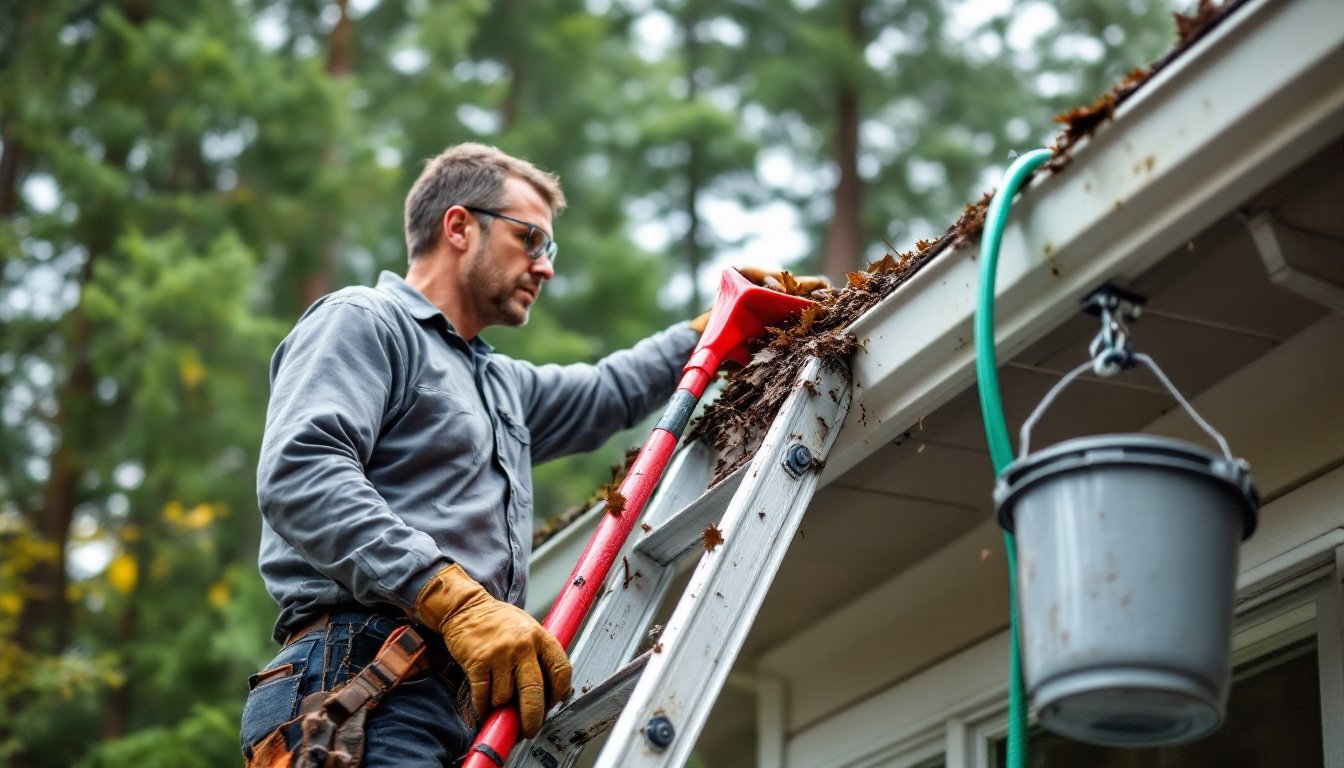
- Scoop out debris by hand or with a gutter scoop (a plastic trowel works). Drop it into a bucket hung from the ladder using an S-hook, don’t toss it down, or you’ll spend an hour raking the lawn.
- Check downspout openings. If clogged, use a plumber’s snake or pressure washer wand inserted from the top. Some Raleigh homes have underground drain extensions, disconnect these at the elbow before flushing to avoid pushing clogs deeper.
- Flush the system with a garden hose. Start at the end farthest from the downspout and work back, checking for leaks at seams and end caps.
- Inspect fasteners. Gutter spikes loosen over time: consider upgrading to hidden hanger brackets or screw-in ferrules for better hold, especially on homes with fascia-mounted systems.
- Seal minor leaks with gutter sealant (not silicone, it doesn’t bond to wet metal). Larger holes or separated seams may need pop rivets and a patch.
Essential Tools and Equipment You’ll Need
- Fiberglass extension ladder (for two-story homes, 24-28 feet)
- Ladder stabilizer or standoff bracket (keeps the ladder off gutters and provides a stable work platform)
- Heavy-duty rubber gloves (dish gloves tear too easily)
- 5-gallon bucket with S-hook
- Gutter scoop or plastic trowel
- Garden hose with spray nozzle (not a pressure washer, too much force can damage seams)
- Plumber’s snake or leaf blower attachment for downspouts
- Safety glasses and dust mask (dried pollen is an irritant)
Optional but helpful: A gutter cleaning wand attachment for your hose lets you flush from the ground, though you’ll still need to scoop debris by hand first.
Hiring Professional Gutter Cleaning Services in Raleigh
If you’re hiring out, look for licensed and insured contractors, liability coverage matters when someone’s on your roof. Many Raleigh-area companies bundle gutter cleaning in Raleigh with pressure washing or window cleaning, which can reduce per-service costs.
Ask these questions when getting quotes:
- Do they inspect and flush downspouts, or just scoop debris?
- Will they check for loose fasteners and small leaks?
- Do they haul away debris, or leave it piled in your yard?
- Are gutter guards or screens included, or an add-on?
Reputable services should provide before-and-after photos, especially if you’re not home during the work. Some use drone footage for roof inspections, which is useful for identifying problem areas you can’t see from the ground.
What to Expect: Costs and Service Options
As of 2026, expect to pay $120–$250 for a standard single-story home (1,500–2,000 sq ft) in the Raleigh area, and $200–$400 for two-story homes, according to local cost data. Prices vary based on:
- Linear footage: Most companies charge per foot of gutter ($0.75–$1.50/ft).
- Height and pitch: Two-story or steeper roofs add labor time and risk.
- Condition: Heavily clogged systems or those needing repairs cost more.
- Access: Homes with landscaping close to the foundation or gated backyards may incur surcharges.
Many homeowners use platforms similar to those on HomeAdvisor to compare quotes and vet contractors. Seasonal demand spikes in October and November, book early or pay premium rates.
Service tiers typically include:
- Basic cleaning: Debris removal and downspout flush ($120–$200).
- Standard service: Cleaning plus minor repairs, seal checks, and haul-away ($200–$300).
- Premium package: Everything above, plus gutter guard installation or roof inspection ($400–$800+).
Annual maintenance contracts often discount per-visit pricing by 10–20% and guarantee scheduling during peak seasons.
Preventing Future Clogs: Maintenance Tips for Raleigh Homes
Prevention beats emergency cleanouts. Here’s how to reduce gutter maintenance between scheduled cleanings:
Trim overhanging branches: Keep tree limbs at least 6–10 feet away from the roofline. This reduces leaf and twig debris and cuts down on critter access (squirrels love using branches as highways to your attic).
Install gutter guards: Screens, foam inserts, or micro-mesh systems won’t eliminate cleaning, but they’ll extend intervals. For Raleigh’s mix of pine needles and oak leaves, micro-mesh or reverse-curve systems work best, cheap plastic screens clog with pine needles. Expect $7–$12 per linear foot installed. DIY snap-in guards run $2–$4/ft but require annual removal for full cleaning.
Check and extend downspouts: Discharge water at least 6 feet from the foundation. Use rigid PVC extensions rather than flexible corrugated tubing, which sags and traps debris. If your yard slopes toward the house, consider underground drain lines tied to a dry well or street drain (check local codes, some HOAs restrict this).
Inspect after major storms: Walk your property after heavy wind or hail. Even if gutters aren’t due for cleaning, check for detached hangers or punctures from falling branches.
Schedule annual fascia inspections: Raleigh’s humidity accelerates wood rot. Catch soft spots early, and you’ll pay for a board replacement rather than a full fascia rebuild. Guides from sources like Today’s Homeowner can walk you through basic rot checks and when to call a carpenter.
Redirect roof valleys carefully: If you have architectural shingles or metal roofing, high-flow valleys can overwhelm standard 5-inch K-style gutters. Consider upgrading problem sections to 6-inch gutters or adding a valley diverter to spread flow.
Consistent small efforts, trimming, flushing, inspecting, keep Raleigh’s tree-rich environment from turning your drainage system into a liability. Gutters are unglamorous, but they’re the first line of defense against the kind of water damage that turns a weekend project into a five-figure insurance claim.