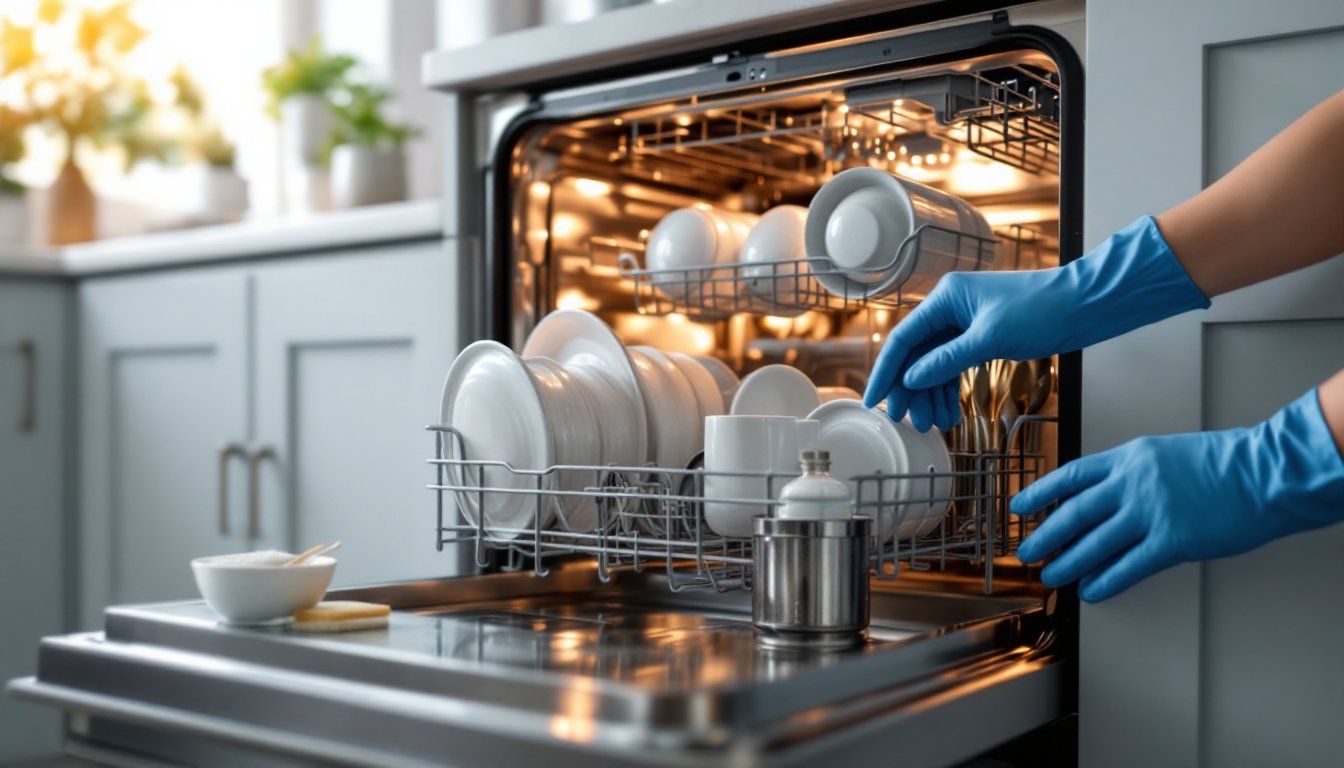
A dishwasher that doesn’t clean is frustrating, but before calling a repair tech or shopping for a replacement, know that most cleaning issues stem from simple, fixable problems. Spray arms get clogged. Filters fill up. Water doesn’t heat properly. The good news? These are things homeowners can diagnose and fix themselves with basic tools and about thirty minutes of troubleshooting. This guide walks through the seven most common reasons dishwashers underperform and how to address each one, starting with the easiest checks and working toward slightly more involved repairs.
Table of Contents
ToggleKey Takeaways
- Most dishwasher cleaning problems stem from simple, fixable issues like clogged spray arms, dirty filters, and improper loading rather than mechanical failure.
- Clean the filter weekly, inspect and unclog spray arms with a toothpick, and check that spray arms rotate freely to restore why your dishwasher is not cleaning properly.
- Proper loading technique—facing dirty surfaces inward, avoiding nesting, and not blocking spray arms or detergent dispensers—can significantly improve wash results.
- Hard water mineral buildup requires monthly vinegar cycles and rinse aid to prevent cloudy dishes and scale deposits on internal components.
- Use the correct detergent type and dosage for your water hardness, ensure water temperature reaches 120°F to 150°F, and verify the inlet hose is clear and water pressure is adequate.
- Most homeowners can diagnose and resolve these issues in about 30 minutes using basic tools before calling a repair technician or replacing the dishwasher.
Clogged or Dirty Spray Arms
The spray arms are the rotating nozzles, usually one at the bottom and one mid-rack, that distribute water throughout the dishwasher. If food particles, mineral deposits, or small debris block the tiny spray holes, water pressure drops and dishes don’t get clean.
Pull out both racks and inspect the spray arms. Spin them by hand to make sure they rotate freely. If they’re sluggish or stuck, check for obstructions around the mounting hub. Remove the arms (most snap or twist off with a quarter-turn) and hold them up to a light. Clogged holes will be obvious.
Cleaning the spray arms:
- Remove both upper and lower spray arms according to the manufacturer’s design (usually a cap or retaining nut).
- Rinse under running water to flush loose debris.
- Use a toothpick or a piece of 22-gauge wire to clear stubborn clogs in each nozzle. Don’t use anything that might widen the holes.
- Soak arms in a 50/50 mix of white vinegar and warm water for 20 minutes if mineral buildup is present.
- Reinstall and test rotation before loading dishes.
Safety note: Wear nitrile gloves when handling parts exposed to food residue and standing water.
Blocked or Malfunctioning Filter
Most modern dishwashers use a self-cleaning filter or a manual filter located at the base of the tub. Manual filters trap food particles and need regular cleaning, usually once a week if the dishwasher runs daily. A clogged filter restricts water flow to the pump, reducing wash effectiveness.
Locate the filter assembly (typically under the lower spray arm). It may consist of a cylindrical fine mesh filter nested inside a coarser screen. If it’s packed with grease, bits of food, or coffee grounds, that’s the problem.
How to clean the filter:
- Remove the lower dish rack.
- Twist or lift out the filter assembly (consult the manual if it’s not obvious, some have a locking tab).
- Rinse under hot running water. Use a soft brush or an old toothbrush to scrub away grease and stuck-on debris.
- Inspect the sump area (the cavity where the filter sits) and wipe out any gunk or standing water with a sponge.
- Reinstall the filter, ensuring it locks back into place. A poorly seated filter can cause leaks or poor cleaning.
Some older or budget models have non-serviceable filters or self-cleaning grinders. If the dishwasher has a grinder and still doesn’t clean well, the issue is likely elsewhere. Models with proper dishwasher filter maintenance guidance in their manuals often perform better long-term.
Improper Loading Techniques
Even a perfectly functioning dishwasher won’t clean dishes that block the spray arms or shield each other from water. Overloading, nesting bowls, or putting large items in the wrong spots are common mistakes.
Loading best practices:
- Face dirty surfaces inward and downward toward the spray arms. Bowls and cups go on the top rack at an angle.
- Avoid nesting. Don’t stack bowls or cups inside one another, water can’t reach the inner surfaces.
- Keep tall items on the sides of the lower rack so they don’t block the upper spray arm’s rotation.
- Don’t block the detergent dispenser. If a large cutting board or baking sheet covers the dispenser door, detergent won’t release properly.
- Leave space between items. Crowding prevents water and detergent from circulating.
Spin the spray arms by hand after loading. If they hit anything, rearrange. It’s a simple check that prevents a wasted cycle.
Hard Water and Mineral Buildup
Hard water contains high levels of calcium and magnesium, which leave a white, chalky film on dishes, glassware, and interior components. Over time, mineral scale clogs spray arms, coats the heating element, and reduces detergent effectiveness.
If dishes come out cloudy or there’s a white residue inside the tub, hard water is likely the culprit. Check the interior walls, door, and especially around the heating element for buildup.
Removing mineral deposits:
- Empty the dishwasher completely.
- Place a dishwasher-safe bowl filled with 2 cups of white vinegar on the top rack.
- Run a full hot-water cycle (no detergent). The vinegar will dissolve scale throughout the system.
- For heavy buildup, sprinkle 1 cup of baking soda on the floor of the tub and run a short hot cycle immediately after the vinegar rinse.
Preventing hard water problems:
- Add a rinse aid to the dispenser. It helps water sheet off dishes and reduces spotting.
- Use detergent formulated for hard water, or add a water softener product to each load.
- If hardness exceeds 10 grains per gallon (check with a test strip or local water report), consider installing a whole-house water softener. Many home maintenance resources offer installation guides.
Run the vinegar cycle monthly in areas with very hard water.
Low Water Temperature or Pressure
Dishwashers need water at 120°F to 150°F to activate detergent enzymes and dissolve grease. If the water heater is set too low or the dishwasher’s internal heater isn’t working, cleaning performance drops.
Test the water temperature by running the kitchen faucet closest to the dishwasher until it’s hot, then catching some in a cup and using a kitchen thermometer. If it’s below 120°F, adjust the water heater.
Low water pressure can also cause weak spray. If other fixtures in the house have good pressure but the dishwasher doesn’t, check the water supply valve under the sink, make sure it’s fully open. Inspect the inlet hose for kinks or blockages.
Checking the inlet valve and hose:
- Turn off the water supply valve and unplug the dishwasher (or flip the breaker).
- Disconnect the inlet hose from the valve (usually a compression fitting). Have a bucket ready for residual water.
- Inspect the small mesh screen inside the valve inlet. If it’s clogged with sediment, rinse it clean or replace it.
- Reconnect and test.
If the dishwasher still doesn’t heat water properly and the inlet is clear, the internal heating element or thermostat may be faulty. That repair typically requires a multimeter and some electrical know-how. If uncomfortable working with 120V appliances, call a tech.
Using the Wrong Detergent or Too Much/Too Little
Detergent type and dosage matter more than most people realize. Too much detergent creates excess suds that reduce wash action and leave a filmy residue. Too little means dishes don’t get clean. Using hand soap or the wrong formulation can cause a sudsy overflow and potential pump damage.
Choosing the right detergent:
- Powder, gel, or pods? Pods are pre-measured and convenient but can be expensive. Powder dissolves well in hard water. Gel works for soft water but may leave residue in hard water.
- Match detergent to water hardness. Many brands offer formulas specifically for hard or soft water.
- Never use regular dish soap. It’s designed to foam, which is the opposite of what a dishwasher needs.
Follow the dosage on the package, but adjust based on results. If dishes come out filmy or with streaks, try cutting the amount by a third. Excess detergent is a common problem, especially with pods in soft-water areas.
Detergent dispenser issues:
If the dispenser door doesn’t open during the cycle, detergent never enters the wash. Check that nothing blocks the door’s path when it flips open. Wipe out old detergent residue that might cause the door to stick. For more troubleshooting tips on appliance performance, sites like The Spruce often provide detailed how-tos.
Rinse aid isn’t optional in most cases, it’s a key part of the drying process and helps prevent water spots. Keep the rinse aid reservoir filled and adjust the dispenser setting based on results.
Conclusion
Most dishwasher cleaning problems come down to maintenance, not mechanical failure. Start with the easiest fixes, clean the filter, check spray arms, adjust the load, and work through the list. Regular monthly cleaning with vinegar and proper detergent use will keep the machine running efficiently. If none of these steps help, or if there’s an obvious mechanical issue like a broken pump or burnt-out heating element, it’s time to call in a pro or weigh repair costs against replacement.